

Ford F-150 EcoBoost: Power Meets Fuel Efficiency
Ford F-150 EcoBoost: Power, Towing & Fuel Efficiency for 2026
Twin-turbo V6 power that tows like a V8 and sips fuel like a car — see how the 2.7L and 3.5L EcoBoost engines stack up for Kansas City drivers, haulers, and daily commuters
The Ford F-150 EcoBoost lineup covers two turbocharged V6 engines built to close the gap between fuel economy and true truck capability: a 2.7L twin-turbo V6 tuned for efficiency and daily driving, and a 3.5L twin-turbo V6 tuned for maximum towing. Rather than relying on cylinder count alone, both engines use direct fuel injection and turbocharging to make big-engine power on demand while still delivering a fuel economy rating that outpaces most V8 trucks in their class — a big part of why EcoBoost has become the volume choice across the F-150’s full lineup of engine options.
This guide breaks down how the 2.7L and 3.5L EcoBoost V6 engines compare on horsepower, torque, towing, payload, and MPG, which 2026 F-150 trims pair with each engine, and how EcoBoost stacks up against the 5.0L V8 and PowerBoost hybrid for buyers cross-shopping the lineup. If you already know which engine you want and are ready to compare trims, our 2026 F-150 trim levels guide is a good next stop.
Key Takeaways
- The 2026 F-150 offers two EcoBoost V6 engines: the 2.7L (325 hp / 400 lb-ft) and the 3.5L (400 hp / 500 lb-ft).
- The 3.5L EcoBoost is rated to tow up to 13,500 lbs — best-in-class among gas V6 engines in its segment.
- The 2.7L EcoBoost is the mileage leader of the two, rated up to 20 city / 26 highway mpg in 2WD form.
- EcoBoost engines are available across most of the trim lineup, from XL up through King Ranch and Tremor.
- The 2026 F-150 lineup starts at $38,710 MSRP, with EcoBoost availability varying by trim and package.
- Every F-150 at Rob Sight Ford includes our standing offer of $100 below invoice pricing on all Ford vehicles except specialty units.
F-150 EcoBoost Lineup — At a Glance
Engines: 2.7L & 3.5L Twin-Turbo V6 | Horsepower: 325–400 hp | Max Towing: Up to 13,500 lbs | Starting MSRP: $38,710
What Is the Ford EcoBoost Engine? Turbocharged Power Explained
EcoBoost is Ford’s umbrella name for a family of turbocharged, direct-injection engines designed to make more power and torque per liter than a comparable naturally aspirated engine, while still qualifying for a stronger EPA fuel economy rating. In the F-150, that means twin turbochargers force extra air into the combustion chamber on demand, and a combination of direct and port fuel injection meters fuel precisely enough to keep both performance and efficiency in check across the full engine lineup, right down to idle.
The result is an engine that behaves like a smaller, lighter unit at a cruise — sipping fuel with the turbos barely spooled — and like a much larger one under load, when stepping on the throttle spins the turbos up and unlocks peak torque almost immediately. That’s why a 325-horsepower 2.7L EcoBoost V6 can out-torque some naturally aspirated V8s, and why the 3.5L EcoBoost has carried the F-150’s highest gas-engine towing rating for several generations running.
Two EcoBoost Engines, Two Different Jobs
Ford builds two distinct EcoBoost V6 engines for the 2026 F-150, and they’re tuned for different priorities rather than simply being a “small” and “large” version of the same thing. The 2.7L is the efficiency-first engine, built for buyers whose trucks spend most of their time commuting, running errands, or towing occasionally. The 3.5L is the capability-first engine, built for buyers who tow often, haul heavy equipment, or want the extra margin of a higher payload rating.
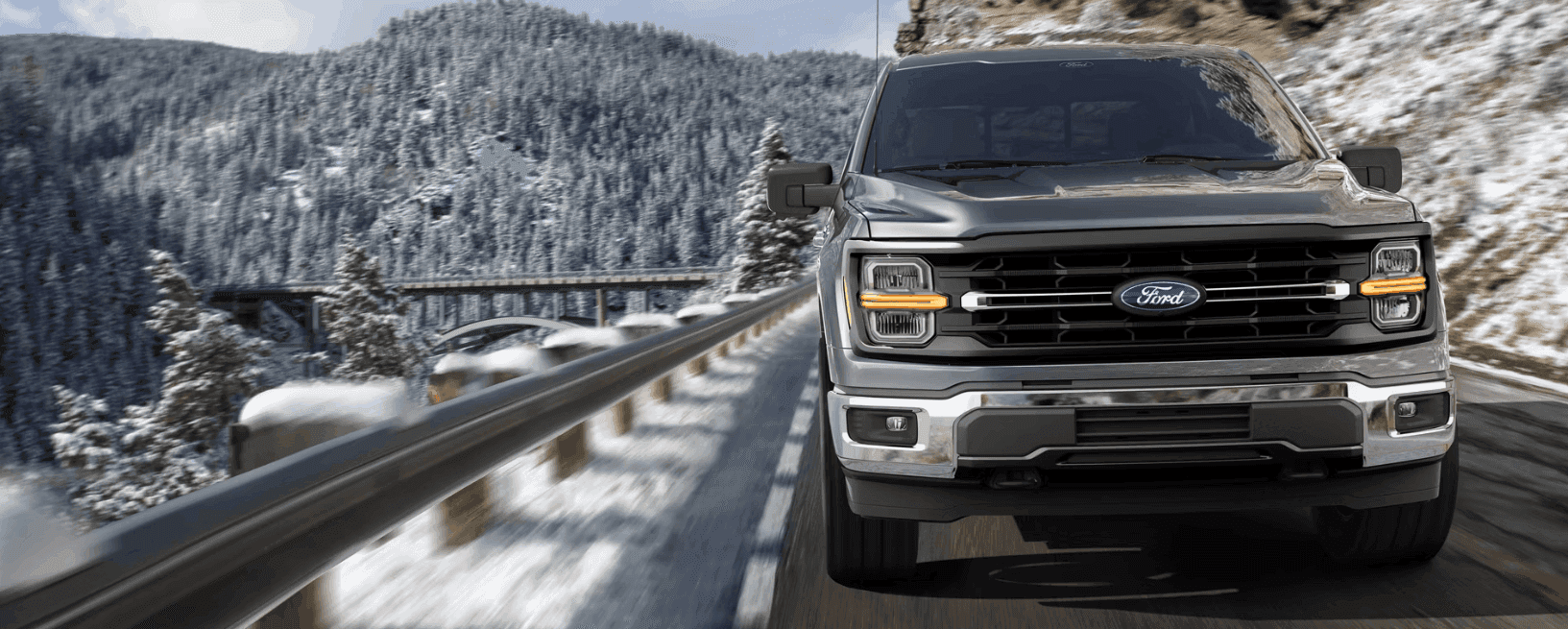
Twin turbochargers and direct injection let the F-150’s EcoBoost V6 engines make big-engine torque on demand without giving up everyday fuel economy.
2.7L vs. 3.5L EcoBoost: Comparing the F-150’s Twin-Turbo V6 Engines
Both EcoBoost engines share the same turbocharged, direct-injection architecture, a 10-speed automatic transmission, and standard Auto Start-Stop technology — but the numbers underneath tell two different stories about how each one is meant to be used.
| Spec | 2.7L EcoBoost V6 | 3.5L EcoBoost V6 |
|---|---|---|
| Horsepower | 325 hp @ 5,000 rpm | 400 hp @ 6,000 rpm |
| Torque | 400 lb-ft @ 3,000 rpm | 500 lb-ft @ 3,100 rpm |
| Max Towing | Up to 8,400 lbs | Up to 13,500 lbs |
| Max Payload | Up to 2,455 lbs | Up to 3,325 lbs* |
| EPA MPG (2WD) | 20 city / 26 hwy / 22 combined | 18 city / 24 hwy / 20 combined |
| Best For | Daily driving, light towing | Regular/heavy towing |
*With the available Heavy-Duty Payload Package. Figures are Ford-published estimates; actual towing, payload, and mileage vary by cab, bed, drivetrain, and axle configuration. Our team can confirm exact ratings for a specific build.
EcoBoost Towing & Payload: How Much Can You Haul?
Towing capacity is where the gap between the two EcoBoost engines opens up the most. The 3.5L EcoBoost’s extra displacement and torque translate directly into trailer capacity — with the Max Trailer Tow Package and the right cab, bed, and axle combination, it’s rated to pull up to 13,500 lbs, which is the highest gas-engine towing figure in the F-150’s twin-turbo V6 class. The 2.7L, by comparison, is rated up to 8,400 lbs — plenty for a boat, small trailer, or light equipment hauler, but a clear step below the 3.5L for anyone towing regularly.
Payload follows a similar pattern but isn’t purely about engine size — cab configuration, bed length, and available packages all move the number. For a full breakdown of towing figures across the entire F-150 engine lineup, including the 5.0L V8 and PowerBoost Hybrid, see our F-150 performance and towing capacity guide.
2.7L EcoBoost
Up to 8,400 lbs towing and 2,455 lbs payload — a strong fit for personal watercraft, small utility trailers, or light landscaping equipment.
3.5L EcoBoost
Up to 13,500 lbs towing and 3,325 lbs payload with the Heavy-Duty Payload Package — built for campers, car haulers, and job-site trailers.
5.0L V8 (for comparison)
Up to 13,000 lbs towing — competitive with the 3.5L EcoBoost, but with a lower highway MPG rating.
PowerBoost Hybrid (for comparison)
Up to 12,700 lbs towing, plus onboard power export — a middle ground between the two EcoBoost engines on capability.
Ford F-150 EcoBoost Fuel Economy: MPG by Engine and Drivetrain
Fuel economy is one of the biggest reasons buyers choose an EcoBoost engine over a V8 in the first place, and the gap between the two EcoBoost options is real enough to matter over a year of ownership. Adding four-wheel drive costs a small amount of highway mileage on both engines, since it adds weight and drivetrain friction, but the relative gap between the 2.7L and 3.5L stays consistent across drivetrains.
| Engine | Drivetrain | City / Highway / Combined MPG |
|---|---|---|
| 2.7L EcoBoost | 4×2 | 20 / 26 / 22 |
| 2.7L EcoBoost | 4×4 | 19 / 24 / 21 |
| 3.5L EcoBoost | 4×2 | 18 / 24 / 20 |
| 3.5L EcoBoost | 4×4 | 17 / 22 / 19* |
*Estimated based on the typical 4×2-to-4×4 mileage gap seen on this engine; confirm exact EPA figures for a specific configuration before purchase. For a full mileage comparison against the 5.0L V8 and PowerBoost Hybrid, see our F-150 MPG guide.

The 3.5L EcoBoost’s 13,500-lb tow rating leads the F-150’s gas V6 lineup, while the 2.7L trades some towing margin for the best fuel economy in the gas engine range.
Which F-150 Trims Come With the EcoBoost Engine?
EcoBoost availability shifts as you move up the F-150’s eight-trim lineup, with the 2.7L acting as the volume engine on entry and mid trims and the 3.5L becoming standard once you reach the trucks built around towing and off-road capability.
| Trim | 2.7L EcoBoost | 3.5L EcoBoost |
|---|---|---|
| XL | Available (upgrade) | Not offered |
| STX | Standard | Not offered |
| XLT | Standard | Available (upgrade) |
| Lariat | Standard | Available (upgrade) |
| King Ranch | Not offered | Standard |
| Platinum | Not offered | Available (upgrade) |
| Tremor | Not offered | Standard |
Raptor uses a distinct high-output 3.5L EcoBoost tuned specifically for that model and isn’t interchangeable with the standard 3.5L above. Trim-level engine availability can shift during the model year, so ask our sales team which EcoBoost configurations are currently in stock for a given trim.
EcoBoost vs. 5.0L V8 vs. PowerBoost Hybrid: Choosing the Right F-150 Engine
EcoBoost isn’t the only engine strategy Ford offers in the F-150, and it’s worth knowing where it fits against the alternatives before you commit to a build. The 5.0L V8 trades some highway mileage for a more traditional power delivery and towing figures close to the 3.5L EcoBoost. The PowerBoost Hybrid pairs the 3.5L V6 with an electric motor for the strongest torque and best all-around fuel economy in the gas-powered lineup, plus onboard power export for job sites and tailgates — at a higher price point than either EcoBoost engine.
Choose 2.7L EcoBoost If…
You want the best fuel economy in the gas lineup, mostly drive around town, and only tow occasionally.
Choose 3.5L EcoBoost If…
You tow regularly, need the highest gas-engine towing rating, or want extra payload margin.
Choose 5.0L V8 If…
You prefer a naturally aspirated engine’s power delivery and don’t want to rely on turbo boost for towing.
Choose PowerBoost Hybrid If…
You want the strongest overall torque, the best fuel economy in the lineup, and onboard power export.
If your F-150 will be titled to a business, an EcoBoost-powered truck configured above the GVWR threshold may qualify for a Section 179 deduction — see our F-150 Section 179 guide for current eligibility rules, and confirm exact figures with your tax advisor before you buy. And if you’re weighing gas power against going electric entirely, our F-150 vs. F-150 Lightning comparison lays out the tradeoffs in range, charging, and total cost of ownership.
Tips for Choosing and Maintaining Your F-150 EcoBoost Engine
A little planning before you order or buy — and a little discipline afterward — goes a long way toward getting the most out of an EcoBoost engine over the life of the truck.
Match the Engine to Your Real Towing Needs
If you tow a trailer more than a few times a year, the 3.5L’s extra towing and payload margin is usually worth the mileage tradeoff versus the 2.7L.
Stay on the Synthetic Oil Schedule
Turbocharged engines run hotter under load than naturally aspirated ones, so sticking to Ford’s synthetic oil interval protects the turbos and keeps carbon buildup in check.
Use Top-Tier Gasoline
Top Tier-certified fuel helps keep direct-injection ports and intake valves cleaner, which matters more on a turbocharged, direct-injection engine than a simpler port-injected one.
Confirm the Build Before You Commit
Towing, payload, and MPG figures shift with cab, bed, and axle choices — have our team confirm the exact numbers for the specific F-150 you’re considering.
Find Your Ford F-150 EcoBoost at Rob Sight Ford
Whether you want the fuel-sipping 2.7L EcoBoost for daily driving or the 13,500-lb-rated 3.5L EcoBoost for regular towing, our team can walk you through both engines side by side and help match the right trim, package, and financing to how you’ll actually use the truck. Every F-150 includes our standing offer of $100 below invoice pricing on Ford vehicles.
Call us at 816-895-6901 to speak with our sales team, browse current F-150 inventory, or apply for financing before you arrive. Serving Kansas City, Overland Park, Lee’s Summit, Grandview, Blue Springs, and the surrounding area.
Frequently Asked Questions
What is the Ford EcoBoost engine, and how is it different from a regular V6?
EcoBoost is Ford’s name for its family of turbocharged, direct-injection engines, built to deliver V8-level power and towing from a smaller-displacement V6. Both F-150 EcoBoost engines pair a twin-turbo setup with high-pressure direct injection and port injection, so the engine breathes like something much larger under load while still earning a stronger fuel economy rating at a cruise. A naturally aspirated V6 only reaches peak torque at higher RPM; an EcoBoost engine builds boost early, which is why the 2.7L EcoBoost can match or beat the torque of some larger V8s despite its smaller displacement.
What’s the difference between the F-150’s 2.7L and 3.5L EcoBoost engines?
The 2.7L EcoBoost V6 makes 325 horsepower and 400 lb-ft of torque and is tuned as the efficiency-focused option, rated up to 26 mpg highway with a lighter curb weight that helps payload. The 3.5L EcoBoost V6 steps up to 400 horsepower and 500 lb-ft of torque and is the towing specialist of the two, rated to pull up to 13,500 lbs — best-in-class among gas V6 engines in its class. In practice, the 2.7L suits daily driving and occasional trailer duty, while the 3.5L fits buyers who tow regularly or need the extra payload available with the Heavy-Duty Payload Package.
Is the F-150 EcoBoost engine reliable and good on gas mileage?
Yes. The EcoBoost lineup has been in F-150 production for well over a decade, and Ford has refined the turbo hardware, cooling, and direct-injection system across multiple generations to reduce the carbon buildup and turbo wear that affected very early versions. Routine maintenance — synthetic oil changes on schedule and keeping the intercooler and injectors clean — goes a long way toward long-term reliability. On mileage, the 2.7L EcoBoost is rated up to 20 mpg city and 26 mpg highway in 2WD form, making it one of the more efficient gas V6 options in the half-ton class.
How much can a Ford F-150 EcoBoost tow?
Towing depends on which EcoBoost engine and configuration you choose. The 2.7L EcoBoost V6 is rated to tow up to 8,400 lbs, while the 3.5L EcoBoost V6 — paired with the Max Trailer Tow Package and the right cab, bed, and axle combination — is rated up to 13,500 lbs, the highest of any standard gas V6 in its class. Our team can confirm the exact towing figure for a specific trim and configuration before you buy.
Which F-150 trims come with the EcoBoost engine?
The 2.7L EcoBoost V6 is available across most of the lineup, including XL, STX, XLT, and Lariat, often as a step-up option over the base engine. The 3.5L EcoBoost V6 is available from XLT through Platinum and is the standard engine on King Ranch and Tremor, where its towing and torque match those trims’ work- and trail-focused positioning. Ask our sales team which EcoBoost configurations are currently in stock.
0 comment(s) so far on Ford F-150 EcoBoost: Power Meets Fuel Efficiency