

Does the Ford Super Duty Qualify for Section 179?
Does the Ford Super Duty Qualify for Section 179?
Section 179 eligibility, GVWR requirements, business use rules, and how Kansas City business owners can maximize first-year tax deductions on an F-250, F-350, or F-450
Yes — every Ford Super Duty model qualifies for Section 179 tax deductions, and for Kansas City business owners, the savings are substantial. The F-250, F-350, and F-450 all exceed the IRS’s 6,000-pound GVWR threshold by thousands of pounds, qualifying them for the maximum first-year deduction available to heavy-duty trucks. At Rob Sight Ford, we help business customers across Kansas City, MO, Overland Park, Lee’s Summit, and Johnson County understand exactly how these deductions work — so you walk into your CPA’s office fully prepared.
This guide covers vehicle eligibility, GVWR specifications by model, business use requirements, documentation, and annual deduction limits — everything on the vehicle side of the equation. We’re not tax advisors, and your specific deduction calculation belongs with a qualified professional. But knowing which trucks qualify and why puts you in a much stronger position when it’s time to make a purchase decision.
Key Takeaways
- All Ford Super Duty models — F-250, F-350, F-450, and F-550 — qualify for Section 179 deductions
- The IRS requires a GVWR over 6,000 lbs; the F-250 starts at 10,000 lbs, the F-350 reaches up to 14,000 lbs, and the F-450 exceeds 16,000 lbs
- Heavy trucks over 6,000 lbs qualify for up to $31,300 in first-year deductions — nearly $11,000 more than lighter vehicles
- The 2025 Section 179 deduction limit is $2,500,000 with a spending cap of $4,000,000 before phase-out begins
- Both new and used Super Duty trucks qualify, as long as the vehicle is new to your business
- Vehicle must be used more than 50% for business, titled in the business name, and placed in service by December 31
- 100% Bonus Depreciation is available in 2025 and can stack with Section 179 for additional first-year deductions
Ford Super Duty Section 179 — At a Glance
F-250 GVWR: 10,000–10,800 lbs | F-350 GVWR: 11,500–14,000 lbs | F-450 GVWR: 16,000+ lbs | Max First-Year Deduction: $31,300 | 2025 Section 179 Limit: $2,500,000 | Bonus Depreciation: 100%
Max First-Year Deduction — Heavy Trucks
lbs — IRS GVWR Threshold
Business Use Required
2025 Section 179 Annual Limit
Bonus Depreciation Available (2025)
In-Service Deadline — Current Tax Year
What Is the Section 179 Tax Deduction for Business Vehicles?
Section 179 is an IRS provision that lets businesses immediately deduct the full purchase price of qualifying equipment — including heavy-duty trucks — in the year of purchase, rather than spreading deductions across multiple years through traditional depreciation. For Missouri business owners buying a Ford Super Duty as a work vehicle, this means a significant reduction in taxable income in the same year you make the investment.
Under traditional depreciation, the IRS treats most vehicles as five-year assets — meaning you deduct roughly 20% of the cost per year. With Section 179, you elect to “expense” the purchase and claim the allowable deduction all at once in year one. For a Kansas City business buying an F-350 or F-450, the difference in first-year cash flow is dramatic. And because Super Duty trucks clear the 6,000-pound GVWR threshold by a wide margin, they avoid the restrictive “luxury vehicle” depreciation caps that limit deductions on lighter vehicles.
Section 179 vs. Traditional Depreciation
| Feature | Section 179 | Traditional Depreciation | Business Impact |
|---|---|---|---|
| Deduction Timing | First year — up to 100% | Spread over 5–7 years | Immediate cash flow advantage |
| 2025 Annual Limit | Up to $2,500,000 | Percentage-based, yearly | Higher first-year tax savings |
| Heavy Truck Threshold | Over 6,000 lbs GVWR | Any qualifying vehicle | Best for work trucks over 6,000 lbs |
| New vs. Used | Both qualify (new to business) | Both qualify | More purchase flexibility |
| Luxury Vehicle Caps | Avoided for trucks over 6,000 lbs | Apply to lighter vehicles | Super Duty avoids restrictive limits |
For most Kansas City businesses buying a Ford Super Duty for commercial use, Section 179 is the superior approach. The immediate deduction reduces tax liability in the year the investment is made — exactly when the cash flow benefit matters most. Businesses that also want to explore how this works on a lighter Ford truck can find details in our Ford F-150 Section 179 eligibility guide.
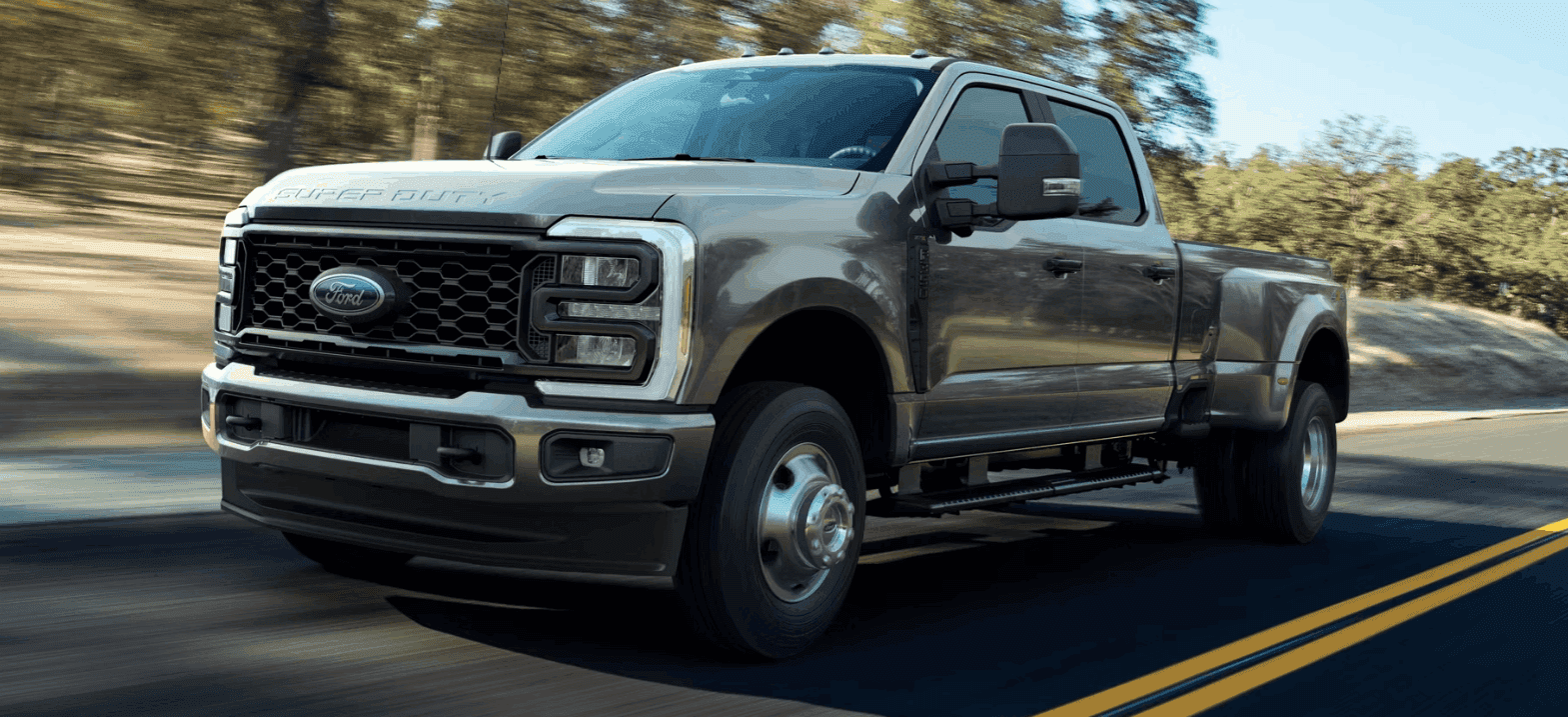
Every Ford Super Duty configuration — cab style, bed length, trim level, and engine choice — qualifies for Section 179. Available at Rob Sight Ford in Kansas City.
Does the Ford Super Duty Qualify for Section 179? (F-250, F-350, F-450)
Unambiguously, yes. Every Ford Super Duty model qualifies, and every configuration within those models qualifies: regular cab or crew cab, short bed or long bed, gasoline V8 or 6.7-liter Power Stroke diesel, XL work truck or Limited luxury trim. Section 179 eligibility is determined entirely by GVWR — and every Super Duty is engineered to exceed the 6,000-pound threshold by thousands of pounds.
The Gross Vehicle Weight Rating is the manufacturer’s specification for the maximum weight a truck can carry when fully loaded — including the vehicle itself, passengers, cargo, and equipment. You’ll find the GVWR on a sticker inside the driver’s door frame of every Super Duty. Here’s how each model stacks up against the IRS threshold:
| Model | GVWR Range | Section 179 Status | Max First-Year Deduction |
|---|---|---|---|
| Ford F-250 Super Duty | 10,000–10,800 lbs | ✓ Fully Qualifies | $31,300 |
| Ford F-350 Super Duty | 11,500–14,000 lbs | ✓ Fully Qualifies | $31,300 |
| Ford F-450 Super Duty | Over 16,000 lbs | ✓ Fully Qualifies | $31,300 |
| IRS Heavy-Duty Threshold | Over 6,000 lbs | Required minimum | $31,300 |
| Light Vehicles (for reference) | Under 6,000 lbs | Partial — luxury caps apply | $20,400 |
All Configurations Qualify — No Exceptions
F-250 Super Duty
Regular Cab, SuperCab, and Crew Cab — all qualify. Both bed lengths. Gas V8 and Power Stroke diesel. Every trim from XL to Limited. The F-250 tows up to 20,000 lbs and carries up to 4,260 lbs of payload, making it the right entry point for most Kansas City contractors and tradespeople who want Section 179 benefits with commercial-grade capability.
F-350 Super Duty
Single rear wheel and dual rear wheel configurations both qualify. Conventional towing up to 21,200 lbs; fifth-wheel and gooseneck up to 32,000 lbs. Contractors, landscapers, and towing operators across the Kansas City metro rely on the F-350 as their daily work vehicle — and every one of them qualifies for the full Section 179 deduction.
F-450 Super Duty
Conventional towing up to 24,200 lbs; fifth-wheel and gooseneck up to 37,000 lbs. The F-450’s GVWR over 16,000 lbs leaves zero ambiguity about its commercial purpose. Chassis cab configurations for custom upfitting are common in Missouri commercial fleets, utility operations, and heavy equipment businesses — all fully eligible.
Whether you’re configuring a base XL work truck or a fully loaded 2026 Ford F-250 Lariat, the Section 179 eligibility doesn’t change. The tax code judges by GVWR alone — and every Super Duty clears that bar by a wide margin.
Business Use Requirements and Documentation
Vehicle eligibility is only half the equation. The IRS also requires that you use your Ford Super Duty for business — and that you can document it. Understanding these requirements before you take delivery ensures your deduction is properly supported from day one.
The 50% Business Use Threshold
Your Super Duty must be used for qualified business purposes more than 50% of the time to claim Section 179. If business use falls below 50% in any given year, you lose the deduction for that year and may need to recapture a portion of any deduction previously taken. If you split usage between business and personal, your deduction is prorated — a truck used 75% for business qualifies for 75% of the allowable deduction. Documentation is what proves that percentage to the IRS.
The IRS considers a broad range of commercial activities as qualifying business use. Driving to job sites, transporting tools and equipment, hauling work trailers, making deliveries, and meeting clients at various locations all count. One important exclusion: regular commuting from your home to a fixed workplace does not qualify, even in a work truck. If your home is your primary business location, however, driving from there to job sites typically does count.
Three Additional Eligibility Requirements
Business title: The truck must be titled in your business name — LLC, corporation, partnership, or sole proprietor DBA. A truck purchased personally and later converted to business use does not qualify for Section 179. Our team at Rob Sight Ford ensures business customers complete titling correctly from the point of sale.
December 31 in-service deadline: The truck must be purchased, delivered, and placed into business service before December 31 of the tax year you’re claiming. “Placed in service” means the vehicle is available and ready for business use — it doesn’t need to have completed a work trip yet. Many Overland Park and Kansas City business owners time year-end purchases specifically to capture the current year’s deduction, and our team is experienced in handling those transactions efficiently.
Legitimate commercial transaction: The vehicle must be acquired through a standard commercial sale. Private transactions between family members or related parties typically do not qualify.
Documentation Required to Support Your Deduction
| Document | What It Proves | How Long to Keep |
|---|---|---|
| Vehicle Title | Business ownership of the truck | Permanently |
| Purchase Invoice / Bill of Sale | Purchase price and date of acquisition | 7 years minimum |
| Mileage Log | Business use % (date, destination, purpose, miles per trip) | 7 years minimum |
| IRS Form 4562 | Official Section 179 election, filed with your tax return | 7 years minimum |
| Financing Documents | Payment terms and business loan structure | Until paid off + 7 years |
A detailed mileage log is your most important ongoing document. Each entry should include the date, destination, business purpose, and miles driven for the trip. Modern mileage-tracking apps automate most of this and generally satisfy IRS requirements. Start the log on the day you take delivery — gaps in early records are one of the most common vulnerabilities in vehicle deduction audits.
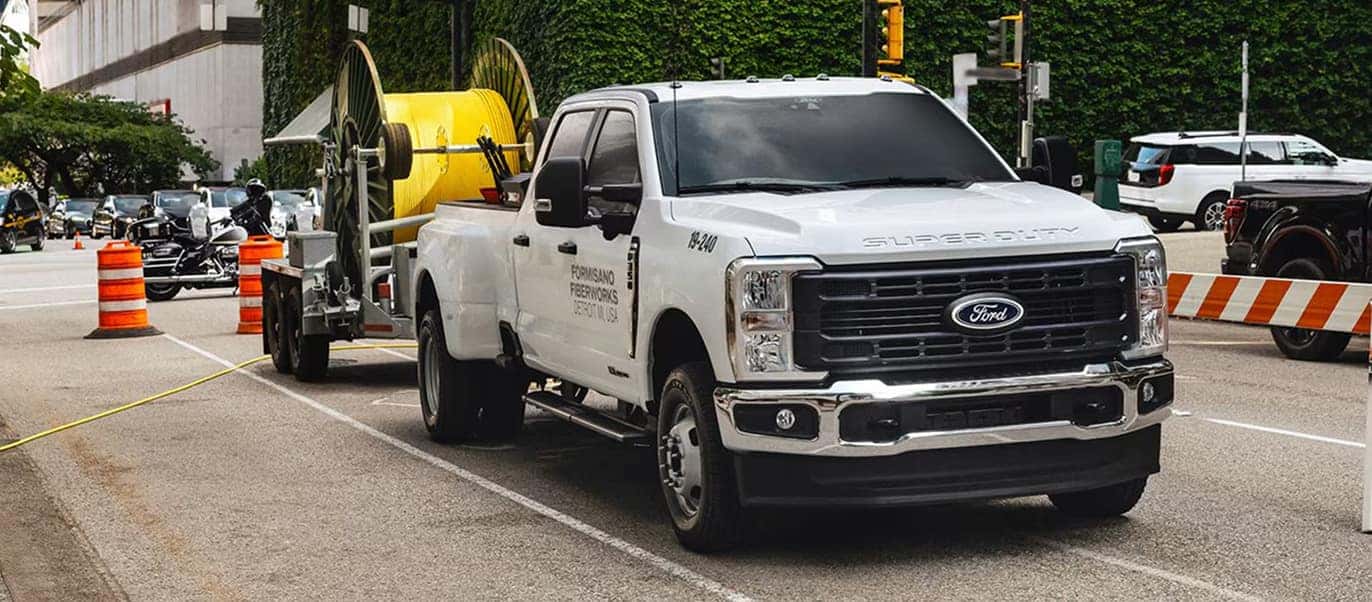
Rob Sight Ford’s Super Duty inventory includes F-250, F-350, and F-450 configurations — all Section 179 eligible, in Kansas City and ready to go to work for your Missouri business
Section 179 Limits, Bonus Depreciation, and How to Claim
Understanding the annual deduction limits and how Section 179 interacts with Bonus Depreciation helps Kansas City business owners plan the most advantageous first-year tax position. For most businesses buying one or two Super Duty trucks per year, the limits are generous enough that you’ll capture the full available benefit without concern about phase-outs.
2025 Annual Limits and Phase-Out Thresholds
The 2025 Section 179 deduction limit is $2,500,000 in total qualifying equipment purchases. The spending cap — where the deduction begins to phase out — is $4,000,000. The deduction reduces dollar-for-dollar above that cap and phases out completely at $6,500,000 in total purchases. For most Missouri businesses purchasing Super Duty trucks, these thresholds are not a concern.
What matters more for most Super Duty buyers is the per-vehicle deduction for heavy trucks: up to $31,300 in first-year deductions for vehicles over 6,000 lbs GVWR — nearly $11,000 more than the $20,400 cap on lighter vehicles. That gap alone is one of the strongest financial reasons to choose a Super Duty over a crossover or light-duty truck for commercial use.
Stacking Bonus Depreciation for Additional First-Year Savings
Bonus Depreciation is a separate IRS provision that allows businesses to deduct qualifying costs beyond Section 179 limits in the year of purchase. For 2025, 100% Bonus Depreciation is available — meaning, under the right business circumstances, Section 179 and Bonus Depreciation can be used together to potentially deduct a significantly larger portion of a Super Duty purchase in the first year. Your tax advisor can determine the optimal combination based on your business structure, income level, and current-year equipment purchases.
| Deduction Type | 2025 Limit | Applies to Super Duty? | Notes |
|---|---|---|---|
| Section 179 — Heavy Trucks | Up to $31,300 per vehicle | Yes — all Super Duty models | Requires >50% business use |
| Bonus Depreciation | 100% available in 2025 | Yes — qualifying trucks | Can be combined with Section 179 |
| Section 179 Annual Cap | $2,500,000 total equipment | Applies to all equipment | Phase-out begins at $4,000,000 |
| Light Vehicle Cap (for reference) | Up to $20,400 | N/A — Super Duty exceeds 6,000 lbs | Luxury vehicle limits apply to lighter vehicles |
How to Claim: IRS Form 4562
The Section 179 election is made on IRS Form 4562, filed with your annual business tax return — Schedule C for sole proprietors, Form 1065 for partnerships, or Form 1120 for corporations. Your tax professional completes Part I of the form, listing the Super Duty with its cost basis and calculating the allowable deduction based on your documented business use percentage and business income.
We strongly recommend scheduling a consultation with a CPA or qualified tax advisor before purchasing — not after. A pre-purchase conversation lets your advisor confirm the deduction amount for your specific situation, verify titling requirements, and ensure the vehicle is placed in service before the December 31 deadline. At Rob Sight Ford, we provide all the vehicle documentation your advisor needs, and we’re experienced in helping Johnson County and Kansas City business owners close year-end purchases on time. You can also review our Ford Bronco Section 179 guide if you’re comparing other Ford commercial vehicles in your fleet planning.
Find Your Section 179-Eligible Super Duty at Rob Sight Ford in Kansas City
Every Ford Super Duty in our Kansas City inventory qualifies for Section 179 — F-250, F-350, and F-450, across every cab style, bed length, trim level, and engine option. Whether you’re a contractor in Lee’s Summit, a fleet operator in Overland Park, or a Missouri business owner making a year-end equipment purchase, our commercial vehicle team can help you find the right configuration and ensure all paperwork is completed correctly from the start.
Call us at 816-895-6901 to speak with a commercial vehicle specialist, browse our current Super Duty inventory, or apply for business financing before you arrive. Serving Kansas City, Overland Park, Lee’s Summit, Johnson County, Blue Springs, and communities across Missouri.
Frequently Asked Questions
Does the Ford Super Duty qualify for Section 179 tax deductions?
Yes. All Ford Super Duty models — F-250, F-350, F-450, and F-550 — qualify for Section 179 tax deductions. The IRS requires a GVWR over 6,000 pounds for full eligibility, and every Super Duty configuration far exceeds that threshold, starting at 10,000 pounds on the F-250 and exceeding 16,000 pounds on the F-450. Kansas City business owners can use this deduction to write off up to $31,300 in the first year of ownership.
What GVWR do Ford Super Duty trucks have, and how does that affect Section 179 eligibility?
Ford Super Duty trucks have GVWRs ranging from 10,000–10,800 pounds on the F-250, 11,500–14,000 pounds on the F-350, and over 16,000 pounds on the F-450 — all far exceeding the IRS 6,000-pound threshold. Because they exceed 6,000 lbs, Super Duty trucks qualify for the full $31,300 first-year deduction rather than the $20,400 cap on lighter vehicles, and avoid restrictive luxury vehicle depreciation limits.
How much can Kansas City business owners deduct on a Ford Super Duty using Section 179?
Heavy-duty trucks over 6,000 pounds GVWR — including all Ford Super Duty models — qualify for up to $31,300 in first-year Section 179 deductions for the 2025 tax year. The exact deduction depends on your business use percentage, purchase price, and overall business income. Bonus Depreciation at 100% in 2025 may provide additional first-year deductions beyond this limit. Always consult a qualified tax professional to calculate your specific deduction.
Do both new and used Ford Super Duty trucks qualify for Section 179?
Yes. Both new and used Ford Super Duty trucks qualify for Section 179, provided the vehicle is new to your business. A pre-owned F-350 purchased from Rob Sight Ford and titled in your business name qualifies the same as a brand-new F-250 — as long as your business hasn’t previously owned or depreciated that specific vehicle. This gives Kansas City business owners more flexibility when budgeting for a commercial truck.
What is the business use requirement for claiming Section 179 on a Ford Super Duty?
Your Ford Super Duty must be used for business purposes more than 50% of the time to qualify for Section 179. If you use it for both business and personal purposes, your deduction is prorated by the business-use percentage. The vehicle must also be purchased, delivered, and placed in service by December 31 of the tax year, and it must be titled in the business name — not your personal name. Maintaining a detailed mileage log throughout the year is essential to support your deduction.
0 comment(s) so far on Does the Ford Super Duty Qualify for Section 179?