

Does the Ford Bronco Qualify for Section 179?

Does Ford Bronco Qualify for Section 179? Yes—but it depends on the model. Four-door Bronco models (GVWR 6,200-6,500 lbs) and the Bronco Raptor (GVWR 6,700+ lbs) qualify for up to $30,500 in first-year deductions. Two-door Broncos may qualify depending on configuration (GVWR near 6,000 lbs). The Bronco Sport does NOT qualify (GVWR 4,700-5,000 lbs). Requirements: vehicle must be used 50%+ for business, titled in company name, and placed into service by December 31st of the tax year. Visit Rob Sight Ford in Kansas City to verify GVWR on specific models.
Could your next business vehicle purchase save you thousands in taxes? It could also give you one of America’s most capable SUVs. If you’re a business owner looking at a new vehicle, knowing about tax advantages is key.
We’re here to guide you through the Section 179 tax deduction opportunity. This rule lets business owners deduct a big part of the cost of qualifying vehicles. These vehicles must be used mostly for work.
The answer to whether the iconic SUV qualifies isn’t simple. It depends on the model you pick. The GVWR (Gross Vehicle Weight Rating) of each model decides if it’s eligible.
At Rob Sight Ford in Kansas City, we know picking a business vehicle is more than just about looks and power. Smart business owners look for ways to save money through tax benefits. That’s why we help you figure out which models can save you a lot as a business expense.
Understanding vehicle weight classes is the first step to these savings. We’ll show you how each model fits your business needs and financial goals.
Key Takeaways
- Whether your Bronco qualifies depends entirely on its GVWR—the model’s weight rating determines tax deduction eligibility
- Vehicles with GVWR exceeding 6,000 pounds unlock significant tax advantages under current regulations
- The 2024 deduction limit reaches $1,220,000, with additional bonus depreciation available for qualifying purchases
- Your vehicle must be used at least 50% for business purposes to claim these valuable deductions
- Timing matters—purchases must be completed and placed into service by December 31st of the tax year
- Different Bronco configurations offer varying GVWR ratings, making model selection critical for tax planning
Understanding Section 179 Tax Deductions for Vehicles
As a business owner, learning about Section 179 vehicle deductions can save you a lot on your next vehicle purchase. This IRS rule lets you deduct the full price of your purchase in the year you buy it. You don’t have to spread out the depreciation over years.
Tax codes can be tricky, but Section 179 makes investing in your business easier. It’s like a reward for growing your company. When you buy qualifying equipment or vehicles, you can lower your taxable income right away.
At Rob Sight Ford, we guide Kansas City business owners through these tax benefits every day. Our team knows the vehicles and what makes them eligible for tax savings.
Core Requirements for Vehicle Eligibility
To qualify for Section 179 SUV requirements, your vehicle must meet certain criteria. The most important factor is weight. It needs a Gross Vehicle Weight Rating (GVWR) over 6,000 pounds.
Here are the essential requirements your vehicle must meet:
- GVWR must be over 6,000 pounds
- Used for business purposes at least 50% of the time
- Purchased and placed into service by December 31st of the tax year
- Title must be in the company’s name, not an individual’s name
- Purchased through an “arm’s-length” transaction (from an unrelated party)
- Financed with qualified loans or leases
The business use requirement is key. You must use the vehicle for work at least half the time. If it’s used less, it won’t qualify for the deduction.
2024 Deduction Limits and Bonus Depreciation
In 2024, you can deduct up to $1,220,000 for qualifying equipment purchases. The purchase limit is $3,050,000 before it starts to phase out. These limits help most small and medium-sized businesses.
Bonus depreciation adds more to Section 179 vehicle deductions. Currently, it’s 60% for both new and used commercial vehicles. This can lead to big tax savings when you invest in qualifying vehicles.
Heavy SUVs between 6,000 and 14,000 pounds have a special category. They qualify for up to $30,500 in deductions in the first year. This applies to many popular SUV models that businesses use daily.
New and Used Vehicle Qualification
Both new and used vehicles can qualify for these tax benefits. The key is that the vehicle must be new to your business. You can’t have owned it before under a different arrangement.
If you’re thinking about a pre-owned vehicle, make sure you’re buying from someone unrelated. Purchases from family or controlled businesses don’t qualify under the arm’s-length transaction rule.
Personal Use Considerations
Personal use affects your deduction amount. If you use the vehicle for personal reasons, your deduction will be less. A vehicle used 70% for business only qualifies for 70% of the deduction.
You can’t change a personal vehicle to business use and claim the deduction later. The vehicle must be bought with business intent from the start. Using it personally first means it won’t qualify for Section 179 SUV requirements.
Complete business use (100%) lets you claim the full deduction. Many business owners keep logs to track their business mileage. This documentation is important if the IRS asks for verification.
Getting Professional Tax Guidance
Every business has its own tax situation. While we’ve covered the basics, your specific case might have extra considerations. Always talk to your tax advisor before making tax-related purchase decisions.
Our team at Rob Sight Ford knows these deduction rules well. We can help you find Ford Bronco models that meet the weight and criteria. We’re here to be your partner in finding vehicles that meet your needs and save you money.
The right vehicle can offer more than just performance. When you combine a great vehicle with smart tax planning, you get the most out of your investment. Let us help you see how the Ford Bronco lineup can fit your business needs and save you on taxes.
Does Ford Bronco Qualify for Section 179 Based on Model and Weight?
Not all Ford Bronco models qualify for Section 179 deductions. Let’s look at each model to help you decide. The key factor is the Gross Vehicle Weight Rating, or GVWR. This tells you the max weight your vehicle can carry, including passengers and cargo.
Tax planning can be tricky. We’ve organized this info by Bronco model. This makes it easier for Kansas City business owners to find what they need.
The critical threshold for a heavy SUV tax write-off is a GVWR over 6,000 pounds. Vehicles over this weight can qualify for Section 179 deductions. The deduction amount depends on whether your vehicle is a heavy SUV or exceeds certain weight limits.
Two-Door Configuration Weight Ratings
The Ford Bronco two-door models have a special situation for business owners. Most two-door Broncos have a GVWR just below 6,000 pounds. This means they usually don’t get the full Section 179 deduction benefits.
The two-door Bronco is lighter, making it agile and fun to drive. But for tax purposes, this can be a drawback. Base models and mid-level trims usually weigh between 5,200 and 5,800 pounds for GVWR.
But, some two-door Broncos with specific packages and equipment can hit the 6,000-pound mark. We suggest checking the exact specs of your desired configuration. Our team at Rob Sight Ford can get the official weight ratings for any build you’re considering.
Four-Door Configuration and Tax Benefits
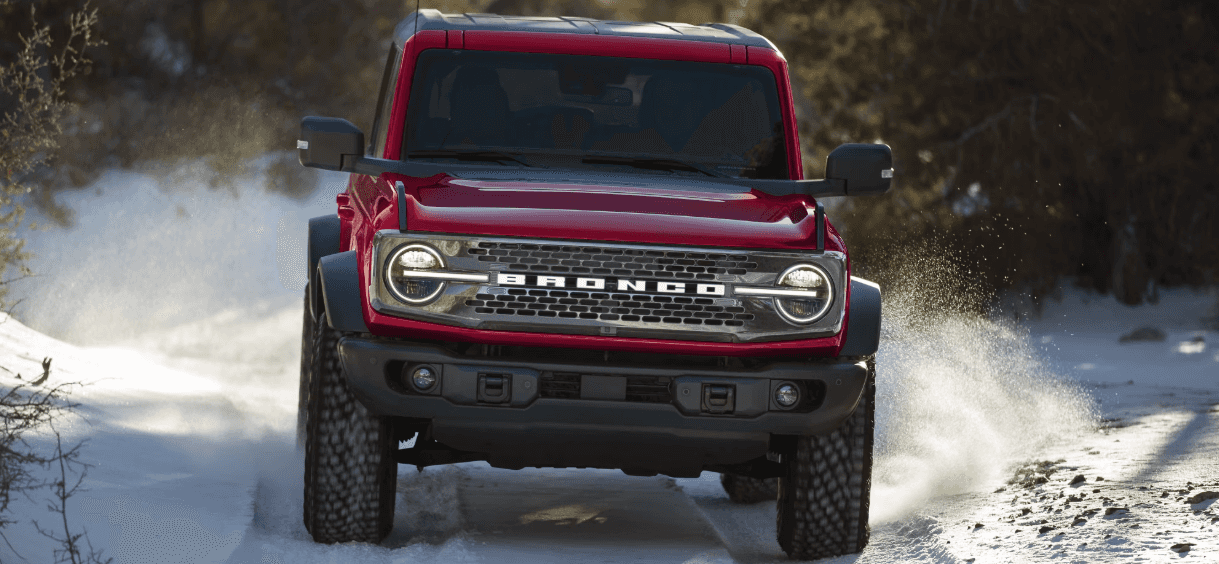
The four-door Ford Bronco models offer better news for business owners seeking Section 179 advantages. These longer-wheelbase variants consistently exceed the 6,000-pound GVWR requirement. This makes them eligible for Section 179 tax deductions.
Most four-door Bronco models have a GVWR ranging from 6,200 to 6,500 pounds. This puts them in the qualifying range. Even the base four-door configurations usually meet the weight threshold without additional packages.
The four-door Bronco qualifies for deductions up to $30,500 under current tax law. This applies to heavy SUVs weighing more than 6,000 pounds but less than 14,000 pounds. Remember, you must purchase and place the vehicle into service before December 31st of the tax year to claim these benefits.
We’ve helped many Kansas City businesses use these deductions with four-door Broncos. The combination of capability, style, and tax advantages makes this configuration attractive for business use. The Bronco’s powerful engine options deliver excellent performance for work demands.
Raptor Model Deduction Advantages
The Ford Bronco Raptor is the premium choice for maximizing your heavy SUV tax write-off. This performance-oriented model features enhanced suspension, wider track, and reinforced components. All these additions contribute to a higher GVWR.
The Bronco Raptor’s GVWR exceeds 6,700 pounds in most configurations. This means it clearly qualifies for Section 179 treatment. The additional weight comes from its robust off-road equipment and larger 37-inch tires.
Beyond the weight benefits, the Raptor offers exceptional business utility. It can handle challenging job sites, severe weather conditions, and demanding terrain. For businesses that need a vehicle capable of going anywhere, the Raptor delivers both performance and tax incentives.
The investment in a Bronco Raptor is significant, but the tax deduction helps offset the initial cost. When you combine the $30,500 deduction with the vehicle’s retained value, it becomes a smart business decision for many operations.
Sport Model Weight Considerations
The Ford Bronco Sport requires special attention in tax planning discussions. Despite sharing the Bronco name, the Sport is built on a different platform. It’s significantly smaller and lighter than the full-size Bronco models.
The Bronco Sport’s GVWR ranges from 4,700 to 5,000 pounds depending on the trim level. This falls well below the 6,000-pound threshold needed for Section 179 qualification. As a result, the Sport doesn’t qualify for the heavy SUV tax deductions we’ve discussed.
This doesn’t mean the Bronco Sport isn’t a valuable business vehicle. It offers excellent fuel economy, maneuverability, and lower operating costs. For businesses that don’t need the larger Bronco’s capabilities, the Sport can be the right choice for other financial reasons.
But, if maximizing your Ford Bronco GVWR Section 179 deduction is a priority, we recommend looking at the full-size four-door models instead. The tax benefits of the larger Broncos can make them more cost-effective over time, even with their higher sticker prices. The Bronco also offers superior off-road capability compared to competitors like the Jeep Wrangler.
| Bronco Model | Typical GVWR Range | Section 179 Eligible | Maximum Deduction |
|---|---|---|---|
| Two-Door Bronco | 5,200 – 5,900 lbs | Usually No | Limited (bonus depreciation only) |
| Four-Door Bronco | 6,200 – 6,500 lbs | Yes | Up to $30,500 |
| Bronco Raptor | 6,700+ lbs | Yes | Up to $30,500 |
| Bronco Sport | 4,700 – 5,000 lbs | No | Standard vehicle limits apply |
We encourage you to visit Rob Sight Ford to discuss your specific business needs. Our finance team can work with your tax professional to ensure you select the Bronco configuration that maximizes your deductions. Remember that vehicle specifications can vary based on options and packages, so always verify the exact GVWR before finalizing your purchase.
Conclusion
So, does Ford Bronco qualify for Section 179? It depends on the model you pick. Full-size Bronco models with a GVWR over 6,000 pounds can get big tax breaks up to $30,500 in the first year. The Bronco Sport usually doesn’t meet this requirement.
Your vehicle must be used for business at least 50% of the time. It must be put into service before December 31st of the tax year. The title should be in your company’s name.
It’s wise to talk to a tax advisor who knows your situation. Rules and guidelines can change. Keeping good records is key to claiming the deduction right.
At Rob Sight Ford in Kansas City, we get both vehicles and business needs. We can show you Bronco models that fit Section 179 rules. We’ll check GVWR for different setups and find the right one for you. Explore our Bronco trim levels to find the perfect configuration for your business.
Visit us to see how a Ford Bronco can be a smart business move and a fun ride. Let’s find a way to make your next business vehicle purchase work for you.
Frequently Asked Questions About Ford Bronco Section 179 Tax Deductions
Does the Ford Bronco qualify for Section 179 tax deduction?
Yes, many Ford Bronco models qualify for Section 179 tax deductions, but eligibility depends on the model and configuration. Full-size Ford Bronco four-door models with a GVWR over 6,000 pounds can receive up to $30,500 in deductions in the first year. Some two-door Bronco models and all Bronco Raptor models also qualify due to their higher weight ratings. However, the Ford Bronco Sport has a GVWR under 6,000 pounds and doesn’t qualify for the heavy SUV tax write-off. At Rob Sight Ford in Kansas City, we can help you verify which Bronco models meet the Section 179 requirements for your business needs.
What is the Ford Bronco GVWR Section 179 requirement?
For a Ford Bronco to qualify for Section 179, it must have a GVWR (Gross Vehicle Weight Rating) over 6,000 pounds. Most four-door Bronco models have GVWRs between 6,200 and 6,500 pounds, making them eligible. The Ford Bronco Raptor exceeds 6,700 pounds in most configurations, clearly meeting the requirement. Two-door Bronco models have GVWRs around 5,200-5,900 pounds, so some may qualify depending on the specific configuration and options. It’s important to verify the GVWR on the vehicle’s certification label before purchasing. GVWR is different from curb weight and represents the maximum weight the vehicle can safely carry including passengers and cargo.
How much can I deduct with a Ford Bronco business expense under Section 179?
If your Ford Bronco qualifies as a heavy SUV (GVWR over 6,000 pounds but under 14,000 pounds), you can deduct up to $30,500 in the first year under Section 179 and bonus depreciation rules based on 2024 tax provisions. This is a significant tax incentive that can substantially reduce your business’s taxable income. The actual deduction depends on the vehicle’s purchase price, your business use percentage, and your total business income. If you use the Bronco 100% for business, you can claim the full deduction amount. If you use it partially for personal purposes, your deduction will be proportionally reduced. We recommend consulting with your tax advisor to calculate your specific deduction based on your situation.
When do I need to purchase a Ford Bronco to claim Section 179 for this tax year?
To claim Section 179 deductions for the current tax year, your Ford Bronco must be purchased and placed into service by December 31st of that year. “Placed into service” means the vehicle is ready and available for business use—not just ordered or paid for. For example, to claim a Ford Bronco tax deduction on your 2024 tax return, the vehicle must be in your possession and being used for business purposes by December 31, 2024. This timing requirement is critical for year-end tax planning. If you’re considering a Bronco purchase for tax benefits, don’t wait until the last minute, as inventory availability and delivery timing can vary. Contact Rob Sight Ford in Kansas City well before year-end to discuss available inventory and ensure delivery timing works with your tax planning objectives. Our team can help you navigate the purchase process efficiently to meet your deadline.
0 comment(s) so far on Does the Ford Bronco Qualify for Section 179?