

How Much Does a Ford F150 Lightning Weigh?

F-150 Lightning Weight: The Ford F-150 Lightning weighs between 6,015 to 6,893 pounds depending on trim level and configuration. This is approximately 2,000 pounds heavier than gas-powered F-150 models, which weigh between 4,021 and 5,014 pounds. The main contributor to this weight difference is the Lightning’s massive 1,800-pound battery pack that provides the truck’s electric capabilities.
The Ford F-150 Lightning weighs almost 7,000 pounds in its heaviest form. This is about 2,000 pounds more than a gas-powered F-150 truck, making it significantly heavier but offering unique advantages in stability and performance.
When we talk about the Ford F-150 Lightning curb weight, it varies based on the trim level and options you choose. In comparison, regular F-150 models weigh between 4,021 and 5,014 pounds.
The main reason for this weight difference is the Lightning’s massive battery pack. This 1,800-pound power source gives the truck its electric capabilities. It’s like carrying an extra small car’s worth of weight.
At our Kansas City location, we help customers understand what this weight means for their daily driving. The extra pounds affect towing capacity and handling. We’re here to answer your questions about whether the Lightning’s specifications match your needs.
Ford F-150 Lightning Weight Specifications by Trim Level
The Ford F-150 Lightning comes in four trim levels, each with its own weight. This affects how it performs and what it can do. We explain how these weights impact your daily and work use in Kansas City.
Each trim has different features and battery sizes, changing the vehicle’s weight. The Pro trim is for commercial use with a standard-range battery. The XLT and Lariat trims have both battery options. The Platinum trim has the extended-range battery pack only.

Pro Trim Curb Weight and GVWR
The Pro trim is the lightest in the Lightning lineup. It’s made for commercial use with a standard-range battery. It has 452 horsepower and can carry up to 2,000 pounds.
Fleet customers like the Pro’s light weight for work. It has a 230-mile range. This makes it perfect for work trucks needing to carry a lot without being too heavy.
XLT Trim Weight Specifications
The XLT trim offers great value with more comfort than the Pro. You can choose between standard-range and extended-range batteries. This lets you pick the right weight and range for you.
The standard-range XLT has 452 horsepower and a 230-mile range. The extended-range version has 580 horsepower and 300 miles of range. Both are great for towing and come with more features than the Pro.
Lariat and Platinum Trim Weight Details
The Lariat trim adds luxury and tech features. Like the XLT, it has both battery options. The extra features add a bit to the weight but make the truck more comfortable and capable.
The Platinum trim is the heaviest. It has the extended-range battery and 580 horsepower. It can tow up to 10,000 pounds and has a 300-mile range.
At Rob Sight Ford, we help you see how these weights affect your driving. The Platinum’s extra weight means more capability and luxury. Many find it worth it for their needs.
How Much Does a Ford F150 Lightning Weigh Compared to Gas F-150s?
Our Kansas City customers often ask about weight differences. The Ford F-150 Lightning is much heavier than gas models. Knowing these weight differences helps you choose the right F-150 for you.
Weight Difference Between Electric and Gas Models
The Ford F-150 Lightning is heavier than gas F-150s. It weighs up to 6,893 pounds, while gas models range from 4,021 to 5,014 pounds. This is a big difference, about 35% more.
Electric vehicles, like the Ford Lightning, are heavier than gas cars. For example, the Tesla Model S is 1,200 pounds heavier than a Lexus ES 350. The Tesla Model 3 is about 1,000 pounds heavier than a Honda Civic.
Despite being heavier, the Lightning is designed to perform well. It has instant torque that helps with the extra weight.
Battery Pack’s Contribution to Overall Weight
The Lightning’s battery pack is the main reason for its weight. It weighs about 1,800 pounds, almost as much as some small cars.
The battery pack is a big weight in the Lightning. But it’s placed in a way that helps with balance and stability.
Ford’s engineers put the battery pack in the right spot. This improves the truck’s balance and keeps its handling good, even with electric power.
What Makes the Electric F-150 Lightning Heavier?
The F-150 Lightning’s weight increase comes from advanced electric parts. It has systems that boost performance but add a lot of weight. This makes the truck heavier than gas-powered F-150s.
Knowing about the F-150 Lightning battery weight and other parts helps us see why it’s heavier. Each part has a role in making the Lightning powerful.
Dual Electric Motor System Weight
The Lightning has two electric motors instead of a traditional engine. These motors give 452 horsepower with the standard battery or 580 horsepower with the extended-range one.
Both motors offer 775 lb-ft of torque right away. The system includes power electronics, inverters, and coolers. These add weight but improve performance.
The truck has a full-time four-wheel drive system. This works well with the motors. It gives great traction without needing a transfer case.
High-Voltage Battery Pack Impact
The battery pack is the biggest weight contributor, weighing about 1,800 pounds. It holds 98.0 kWh or 131.0 kWh of energy, depending on the choice.
Ford put the battery low in the chassis. This improves the truck’s balance and handling. It’s better than traditional trucks.
The battery’s weight means the truck needs stronger parts. These parts help the truck handle the electric system’s stresses safely.
Additional Electric Vehicle Components
The Lightning also has other heavy parts. It has an independent rear suspension for better ride quality. This adds to the truck’s weight.
It has advanced cooling systems for the electric parts. These systems include pumps, radiators, and fluid circuits. Traditional trucks don’t need these.
The truck has strong mounting points and parts for the electric system. These improvements add weight but make the truck more durable and perform better.
| Component | Approximate Weight | Function | Benefit |
|---|---|---|---|
| Lithium-ion Battery Pack | 1,800 lbs | Energy Storage | Extended Range & Power |
| Dual Electric Motors | 400-500 lbs | Propulsion System | Instant Torque & AWD |
| Power Electronics | 200-300 lbs | Energy Management | Efficient Power Delivery |
| Cooling Systems | 150-200 lbs | Thermal Management | Component Protection |
| Structural Reinforcements | 300-400 lbs | Chassis Support | Enhanced Durability |
At Rob Sight Ford in Kansas City, we explain how these choices make the truck heavier but better. The extra weight brings big benefits in performance, capability, and quality. This makes the Lightning a top choice for many drivers.
How F-150 Lightning Weight Affects Your Driving Experience
The F-150 Lightning’s heavier build offers real benefits for drivers in Kansas City. At first, the extra weight might seem like a drawback. But it actually boosts your truck’s performance in several ways.
The added mass makes your truck more stable. This improves safety, handling, and your overall driving confidence.
Customers love how the Lightning’s weight makes driving smoother. The low battery pack lowers the truck’s center of gravity. This reduces body roll during turns and makes driving on highways or city streets safer.
Payload Capacity and Weight Distribution
The F-150 Lightning can carry up to 2,235 pounds, regardless of trim level. This means you can haul big loads, even with the truck’s heavier curb weight. The front trunk adds 400 pounds of extra space for cargo.
Here’s how the Lightning’s payload breaks down:
- Base configuration: 2,000 pounds payload capacity
- Maximum available: 2,235 pounds total payload
- Front trunk contribution: 400 pounds additional capacity
- Rear bed: Standard F-150 cargo space maintained
The weight distribution keeps your truck balanced when loaded. It handles predictably, even with maximum cargo. This is thanks to the battery pack’s central placement under the cabin floor.
Towing Performance Considerations
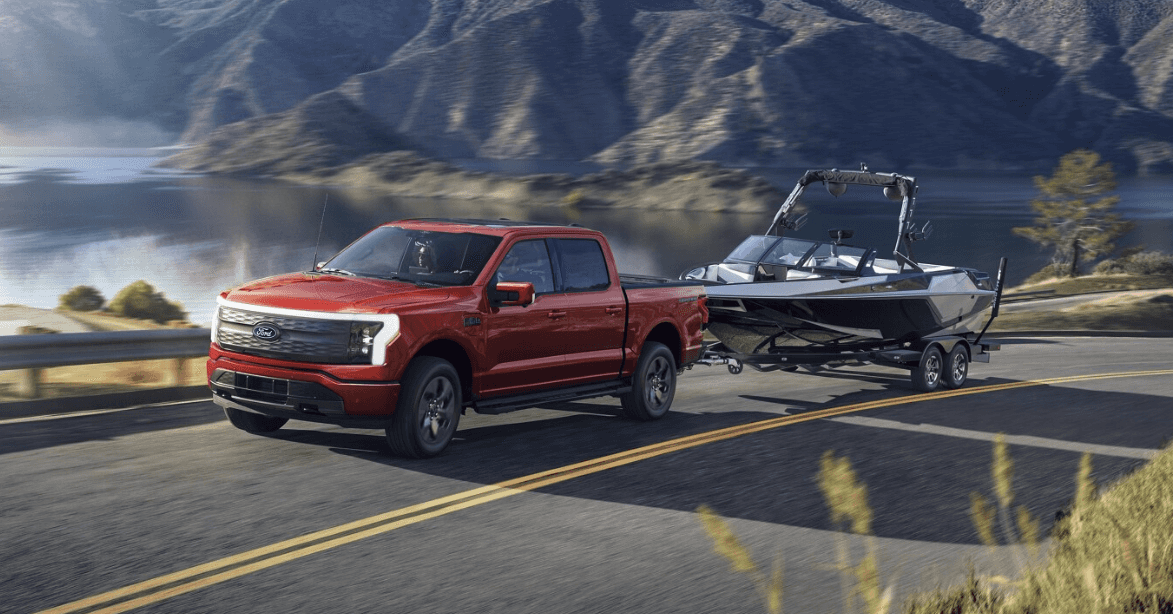
Your Lightning can tow up to 10,000 pounds, just like many gas-powered F-150 models. The extra weight improves towing stability by providing better traction and reducing trailer sway. But, heavy towing significantly cuts your electric range.
Real-world towing data shows important range considerations:
- Light loads (under 5,000 lbs): Minimal range impact
- Heavy loads (7,000+ lbs): Range drops to approximately 90 miles
- Planning becomes critical for long-distance towing trips
- Charging stops need strategic placement along your route
Handling and Stability Benefits
The Lightning’s weight makes driving feel more stable than lighter trucks. Road imperfections feel less jarring because of the mass. This results in a smoother, more comfortable ride for everyone.
The extra mass also improves safety. Electric vehicles like the Lightning offer better crash protection for occupants. The rigid battery pack adds structural strength to the truck’s frame, making it safer.
Driving on highways becomes more confident with the Lightning’s weight advantage. Crosswinds have less effect on the truck’s stability. Sudden lane changes feel more controlled and predictable, giving you greater confidence behind the wheel.
Conclusion: Why the 2025 Ford F-150 Lightning Sets a New Standard
The Ford F-150 Lightning weighs between 6,015 to 6,893 pounds. This shows the hard work to make America’s top truck electric. With 900,000 Ford F-150s sold each year, the Lightning is a big step towards electric trucks.
The 1,800-pound battery pack adds a lot to the Lightning’s weight. This extra weight means you have to think more about how much you can carry. But, it also makes the truck more stable and easier to drive.
Electric trucks like the Lightning are heavier than usual trucks. This has raised safety concerns. The National Transportation Safety Board worries about more crashes because of the weight difference. Knowing this helps you decide if an electric truck is right for you.
At Rob Sight Ford in Kansas City, we help you understand the Lightning’s specs. We can tell if it fits your needs. Whether you’re working or just exploring, the Lightning’s weight matters a lot.
Visit us in Kansas City to see the Ford F-150 Lightning. We can talk about how its weight meets your needs.
FAQ
What is the F-150 Lightning battery weight?
The battery pack weighs about 1,800 pounds. It’s almost as heavy as some small cars! It’s mounted low for better weight distribution and holds 98.0 kWh or 131.0 kWh of energy, depending on your choice.
What makes the Ford electric pickup weight so much higher than gas trucks?
Several factors add to the weight: the 1,800-pound battery pack, dual motors, power electronics, and cooling systems. There are also reinforced components and an independent rear suspension system. These features make the truck heavier but more capable and refined.
What is the F-150 Lightning payload capacity despite its heavy weight?
The Lightning can carry up to 2,235 pounds of cargo. It also has a front trunk (“frunk”) that can hold an extra 400 pounds. So, you can haul a lot despite its heavier weight compared to gas models.
How does the Ford Lightning truck weight affect towing performance?
The Lightning can tow up to 10,000 pounds, matching gas F-150s. But towing heavily can cut the electric range to about 90 miles. So, you’ll need to plan charging stops for long-distance towing.
Does the Ford EV truck weight distribution provide any advantages?
Yes, the low battery pack improves handling and stability. It reduces body roll during turns and enhances overall stability, even with heavy loads or towing. This also makes the ride smoother and more confident on the highway.
How does the F-150 Lightning EV weight comparison affect safety?
The Lightning’s weight offers better crash protection and stability. It helps dampen road imperfections and improves vehicle control. But, it’s important to consider the impact on other vehicles in collisions.
0 comment(s) so far on How Much Does a Ford F150 Lightning Weigh?