

2026 Ford Transit vs Mercedes Sprinter: Which Van Wins?
Compare payload ratings, cargo volume, fuel economy, and total cost of ownership — and find out which commercial van is the right fit for your Kansas City business.
What if the van you think is the best deal actually costs you thousands more over five years? The debate between the 2026 Ford Transit and Mercedes Sprinter is fierce — some prefer Ford’s gas engine for its simplicity and lower price, while others love the Sprinter’s diesel power and long-haul range. The right choice depends entirely on how you’ll use the van every day.
At Rob Sight Ford in Kansas City, we work with commercial buyers across every use case — from weekend campers to plumbing companies and mobile kitchen operators. Whether you’re buying one van or building a fleet, this guide breaks down what really matters: payload, cargo space, fuel costs, service access, and upfitting ease. Browse our current Ford Transit inventory or keep reading for the full comparison.
Key Takeaways
- The Ford Transit offers a lower entry price (~$44,000) and a wider gas-engine service network across the United States.
- The Mercedes Sprinter delivers stronger diesel torque and 22–26 mpg on long highway routes, saving money at high mileage.
- Cargo capacity ranges from ~250 to over 530 cubic feet depending on roof height and wheelbase choices.
- Sprinter 3500 payload tops out at 5,500 lbs vs. ~3,500 lbs for the Transit — a critical gap for heavy builds.
- Mercedes Sprinter maintenance runs 30–45% more per visit than the Transit; annual costs are $1,200–$1,800 higher.
- Both vans support robust aftermarket upfit ecosystems, but the Transit’s gas simplicity suits DIY builds while the Sprinter excels for professional commercial fitouts.
2026 Ford Transit vs. Mercedes Sprinter — At a Glance
Transit Base MSRP: ~$44,000 | Sprinter Base MSRP: ~$52,000 | Transit Gas MPG: 18–22 | Sprinter Diesel MPG: 22–26
Transit Base MSRP
Sprinter Base MSRP
Transit Max Cargo Volume
Sprinter Max Cargo Volume
Transit Max Payload
Sprinter Max Payload
Cargo Capacity, Interior Dimensions & Payload
Space is the first thing commercial buyers need to get right. The combination of roof height, wheelbase length, and payload limit shapes every decision that follows — from shelving layouts to standing room to load capacity. Here’s how the two platforms compare side by side.
Interior Height & Load Floor Dimensions
Roof height is usually the most impactful choice. The Ford Transit comes in low, medium, and high-roof configurations, with the high roof delivering approximately 81.5 inches of standing room. The Mercedes Sprinter high roof comes in around 79 inches — slightly shorter, but offers substantially more floor length at the extended wheelbase. Taller Sprinter models may not clear standard parking garages, which matters for city-heavy operations.
| Specification | Ford Transit (Extended High Roof) | Mercedes Sprinter 3500 (Extended High Roof) |
|---|---|---|
| Interior Height | ~81.5 inches | ~79 inches |
| Load Floor Length | ~148 inches | ~185 inches |
| Max Cargo Volume | ~487.3 cu ft | ~530 cu ft |
| Wheelbase Options | 3 lengths | 3 lengths |
| Standard Garage Fit | Yes (low/medium roof) | No (high roof exceeds 9 ft) |
Payload Ratings & GVWR
Payload is where the two platforms diverge most sharply for professional builders. Keep in mind: a 40-gallon water tank alone weighs over 330 pounds when full. Add lithium batteries, frame upgrades, and HVAC and you eat through a Transit’s budget faster than you’d expect. Always leave a 300–500 pound buffer — and note that exceeding 10,001 lbs GVWR triggers commercial vehicle licensing in most states.
| Specification | Ford Transit (Standard) | Mercedes Sprinter 3500 |
|---|---|---|
| Max Payload Range | 3,000–3,500 lbs | 4,500–5,500 lbs |
| GVWR Range | 9,000–10,360 lbs | 11,030–14,050 lbs |
| Suspension Upgrades Needed | Often required for heavy builds | Less frequent for comparable loads |
| CDL Requirement Threshold | Over 10,001 lbs GVWR | Over 10,001 lbs GVWR |
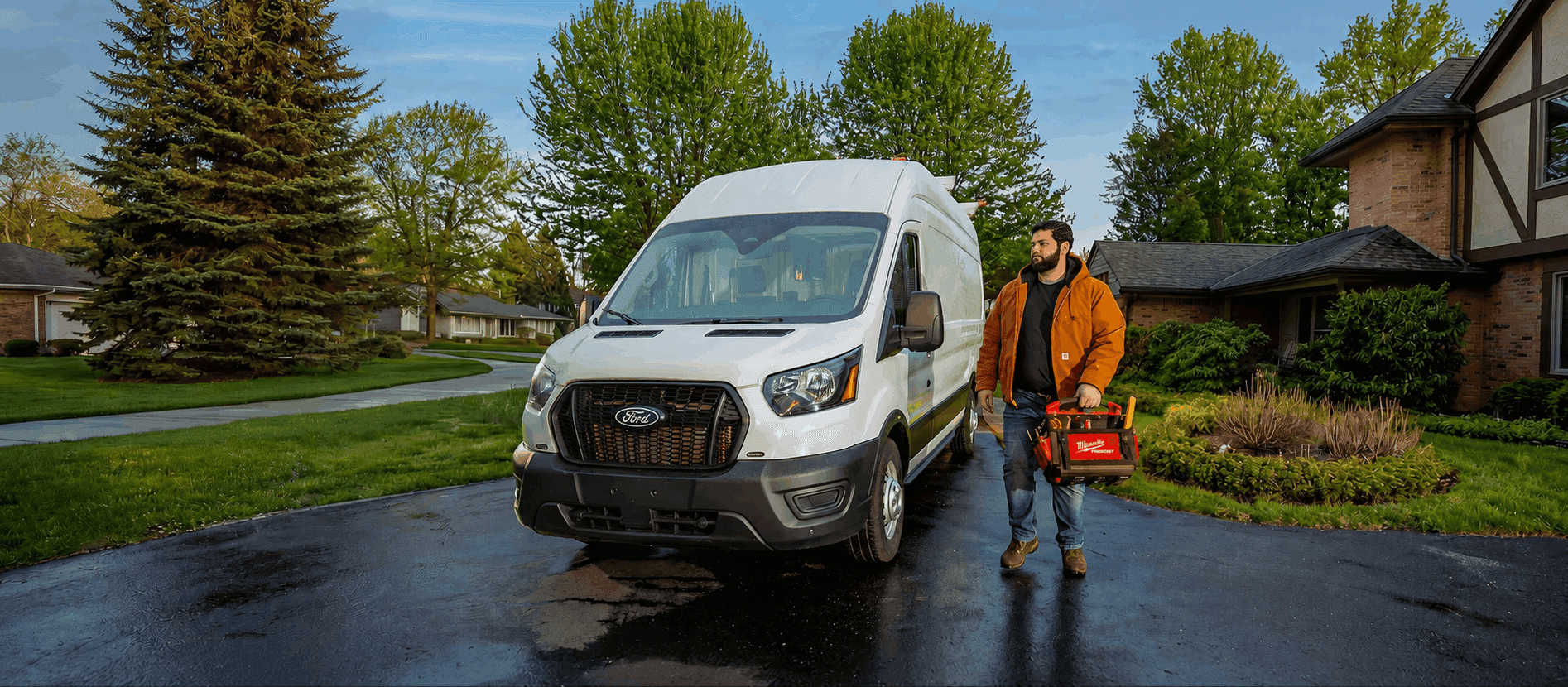
The 2026 Ford Transit’s high-roof configuration delivers 81.5 inches of standing room — ideal for Kansas City trades professionals who spend hours working inside the vehicle. Available now at Rob Sight Ford.
Engine Options & Real-World Fuel Economy
Fuel costs are one of the biggest variables in commercial van ownership. In any comparison of the 2026 Ford Transit vs. Mercedes Sprinter, the engine choice — gas vs. diesel — shapes everything from your per-mile operating cost to how easy it is to find a mechanic. For a deeper dive into Transit-specific configurations, see our full 2026 Ford Transit MPG guide.
Ford Gas Engines: Simplicity & Service
The 2026 Ford Transit uses proven 3.5L EcoBoost and base V-6 gas engines. Gas motors are easier to maintain in the short term, cold-start effortlessly, and can be serviced at any of the 3,000+ Ford commercial vehicle centers nationwide. Expect 18–22 mpg in standard cargo van setups.
Mercedes Diesel: Torque & Long-Distance Efficiency
The Sprinter’s turbo-diesel four-cylinder delivers strong low-RPM torque — confidence-inspiring even fully loaded. Standard cargo Sprinters achieve 22–26 mpg. For operators running 2,000+ miles per week between Kansas City, Dallas, and Denver, the diesel savings add up significantly over a full year.
DEF/AdBlue & Emissions Restrictions
Diesel Sprinters require DEF/AdBlue fluid refills every few thousand miles — an added step and cost. Some U.S. metro areas may restrict diesel vehicles in the future. Gas-powered Transit vans face no such restrictions, making them a safer long-term bet for city-heavy fleets.
Service Interval Differences
Diesel engines go longer between service visits but cost 30–45% more per visit than gas. The Transit’s shorter intervals at lower per-visit cost keep cash flow more predictable for smaller operations. Fleet managers with dedicated service teams often favor diesel for its extended intervals across high-mileage vehicles.
| Metric | Ford Transit (Gas) | Sprinter Cargo (Diesel) | Sprinter 3500 High-Roof (Diesel) |
|---|---|---|---|
| Real-World MPG | 18–22 mpg | 22–26 mpg | 18–22 mpg |
| Fuel Cost Per Loaded Mile | $0.20–$0.24 | $0.16–$0.19 | $0.21–$0.25 |
| Service Cost Per Visit | $250–$400 | $375–$575 | $375–$575 |
| DEF/AdBlue Required | No | Yes | Yes |
| Cold-Start Efficiency | Excellent | Moderate | Moderate |

The Ford Transit’s EcoBoost gas engine delivers 18–22 mpg while keeping maintenance simple and affordable — a major advantage for Kansas City businesses serviced by Rob Sight Ford.
Service Networks, Maintenance & Total Cost of Ownership
A van that’s cheap to fuel but expensive to maintain can quietly drain your budget. When comparing the Ford Transit vs. Mercedes Sprinter, the full three-year cost picture looks very different from the sticker price. Ford Transit owners benefit from the region’s best Ford service infrastructure — with over 3,000 commercial vehicle centers nationwide, routine work is handled quickly and at predictable rates.
| Cost Category | Ford Transit (Annual) | Mercedes Sprinter 3500 (Annual) |
|---|---|---|
| Maintenance Reserves | $4,500–$6,000 | $6,500–$9,500 |
| Commercial Insurance Premiums | $7,500–$11,000 | $9,500–$14,000 |
| Avg. Per-Visit Service Cost | $250–$400 | $375–$575 |
| Base MSRP (Cargo Van) | ~$44,000 | ~$52,000 |
| Depreciation Per Loaded Mile | $0.13–$0.15 | $0.18–$0.22 |
| Best Value Window | 3–5 years / under 80K miles | 5–7 years / over 100K miles |
Mercedes Sprinter service requires specialized diesel tools and technicians — many owners rely on dedicated diesel shops rather than general mechanics, which limits options outside major cities. Both platforms have strong aftermarket and independent shop support, but the Transit’s breadth of service access is unmatched. Always budget at least three years of service costs before committing. Kansas City businesses purchasing commercial vehicles for work use should also ask about Section 179 tax deductions, which can significantly reduce the net acquisition cost.
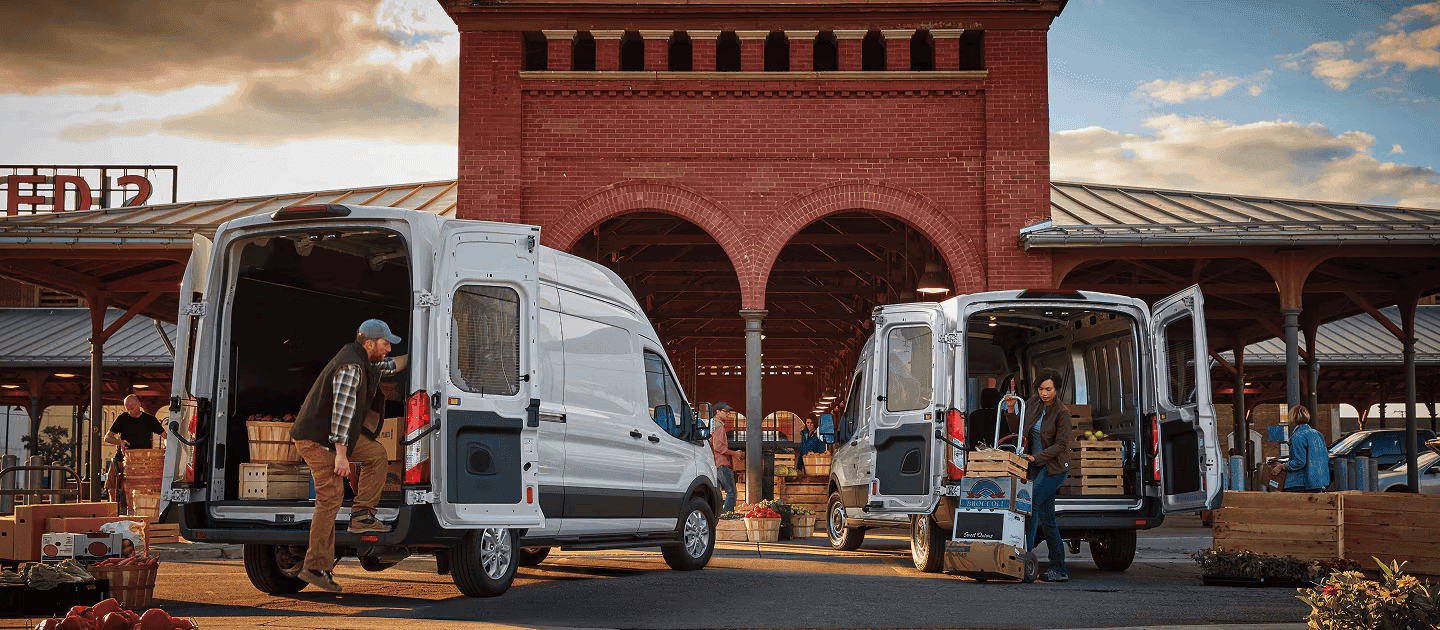
Rob Sight Ford’s commercial service center in Kansas City keeps Transit fleets running with Ford-certified technicians, OEM parts, and transparent pricing — no specialist diesel shop required.
Making the Right Choice for Your Kansas City Business
Your business needs, weekly mileage, and growth plans should drive the decision. Every guide agrees: the best van is the one that matches your operation — not the one with the most impressive spec sheet. Here are four of the most common buyer scenarios we see at Rob Sight Ford.
High-Mileage Operations (2,000+ Miles/Week)
For operators running long routes between Kansas City, Dallas, and Denver, the Sprinter’s diesel engine pays for itself. Diesel vans are purpose-built for long-haul efficiency and engine longevity at sustained highway speeds. If you’ve been in the business over a year with established broker relationships, the Sprinter’s payload premium unlocks higher-value specialized freight.
Local Delivery & Service (Under 500 Miles/Week)
For local delivery teams and service companies operating within the Kansas City metro, the Transit’s gas engine is the clear winner. Short trips with frequent cold starts favor gas, maintenance is simpler and cheaper, and Rob Sight Ford’s commercial service team keeps downtime minimal — because in local service, downtime is lost revenue.
Fleet Scaling on a Budget (Under $50K/Unit)
The Transit’s lower upfront cost and simpler maintenance makes fleet expansion more financially manageable. Adding a second or third Transit costs tens of thousands less than building a Sprinter fleet from the ground up. Start with cargo vans, establish your routes, then upgrade to a Sprinter if high-mileage operations justify the premium.
DIY Builds vs. Professional Upfits
DIY builders prefer the Transit for its accessible gas systems and widely available parts. Professional builders creating ambulances, mobile workshops, or high-end camper conversions gravitate toward the Sprinter for its layout flexibility and higher payload ratings. Both platforms support the same major aftermarket brands: CR Laurence, Dometic, AM Solar, Thinsulate, and Shurflo.
| Business Scenario | Recommended Van | Key Reason |
|---|---|---|
| 2,000+ weekly loaded miles, interstate freight | Mercedes Sprinter | Superior diesel fuel economy on long hauls |
| Local delivery and service under 500 miles/week | Ford Transit | Lower maintenance cost, easy local service access |
| Fleet expansion on a budget under $50,000/unit | Ford Transit | Lower capital per unit for faster scaling |
| Specialized freight (medical, industrial parts) | Mercedes Sprinter | Broker relationships favor Sprinter-specific loads |
| New operator entering the commercial van market | Ford Transit | Broad service network and simpler ownership experience |
Before committing to either platform, map out your actual weekly mileage, your expected payload weight (with a 300–500 lb safety buffer), and your three-year total cost including service and insurance. Then check our full commercial vehicle lineup — including the Transit Connect for lighter loads and E-Series options for heavy-duty applications.
Find Your Ford Transit at Rob Sight Ford in Kansas City
Rob Sight Ford serves commercial buyers across Kansas City, Overland Park, Lee’s Summit, Independence, and the entire metro area. Whether you’re outfitting a single service van or scaling a fleet, our commercial team can help you find the right Transit configuration — cargo, cutaway, or E-Transit — and structure financing that works for your business.
Call us at 816-895-6901, browse our current Transit inventory online, or apply for commercial financing before you arrive.
Frequently Asked Questions
What is the biggest difference between the 2026 Ford Transit and Mercedes Sprinter for commercial use?
The main difference is in drivetrain and interior setup. Ford Transit is known for lower prices, gas engines, and a wide dealer network across the U.S. Mercedes Sprinter focuses on high-roof, long-wheelbase diesel models for high-mileage operations and maximum cargo space. Most commercial buyers choose high-roof vans for better long-term usability.
Which van has better payload capacity — Transit or Sprinter?
The Mercedes Sprinter 3500 can carry 4,500 to 5,500 pounds of payload, while the Ford Transit maxes out at 3,000 to 3,500 pounds. The Sprinter’s extra payload is critical for heavy upfitted builds that include water tanks, lithium battery banks, and HVAC systems. Always leave a 300–500 lb buffer to stay within your GVWR safely.
What is the real-world fuel economy difference between the Ford Transit and Mercedes Sprinter?
The Ford Transit gas engine delivers 18–22 mpg in standard cargo van setups. Sprinter diesel cargo vans achieve 22–26 mpg. Sprinter 3500 high-roof models come in at 18–22 mpg due to added weight. For long-distance routes exceeding 2,000 miles per week, the diesel Sprinter offers meaningful fuel savings over time.
Which is the best work van for someone on a tight budget?
The Ford Transit is the clear winner for budget-focused buyers. It has a lower base MSRP of around $44,000, simpler gas-engine maintenance, and a massive service network with over 3,000 Ford commercial vehicle centers nationwide. Annual maintenance runs $800–$1,200 versus $1,200–$1,800 for the Sprinter.
Which van is better for urban delivery and parking in tight spaces?
The Ford Transit is better for urban delivery and navigating tight spaces. Low- and medium-roof Transit configurations fit in standard parking garages and have a slightly tighter turning radius (~36.1 ft vs. ~36.7 ft). High-roof Sprinters exceed 9 feet in height and won’t clear many commercial dock overhangs or garages, making them better suited for highway routes and suburban depot operations.
0 comment(s) so far on 2026 Ford Transit vs Mercedes Sprinter: Which Van Wins?