

2026 Ford F-350 Towing Capacity: Complete Guide by Trim
2026 Ford F-350 Towing Capacity: Complete Guide by Trim & Configuration
Max towing ratings by engine, DRW vs SRW, conventional vs fifth-wheel, cab configuration, axle ratio, and smart towing tech — everything Kansas City buyers need to find the perfect F-350 setup
The 2026 Ford F-350 Super Duty leads the heavy-duty pickup segment in maximum towing capacity — 38,000 pounds with a fifth-wheel or gooseneck hitch, 28,000 pounds with a conventional receiver hitch, and up to 8,000 pounds of payload in the bed. But the headline number only tells part of the story. Understanding Ford F-350 towing capacity means knowing how engine choice, wheel configuration, cab style, axle ratio, and hitch type interact to determine your actual capability — and which combination is right for your specific towing needs in the Kansas City area.
At Rob Sight Ford in Kansas City, MO, we help buyers work through this every day: contractors choosing between gas and diesel, families deciding between a dually and a single rear wheel, and weekend towers trying to understand why the conventional hitch number is 10,000 pounds lower than the fifth-wheel rating. This guide answers all of it — by engine, by configuration, by cab, and by trim level.
Key Takeaways
- Maximum F-350 towing capacity is 38,000 lbs — requires HO Power Stroke diesel, dual rear wheels, and a fifth-wheel or gooseneck hitch
- Conventional hitch maximum is 28,000 lbs; the 10,000-lb difference is physics, not engine — it’s about weight distribution over the rear axle
- The HO Power Stroke diesel produces 500 HP and 1,200 lb-ft of torque; gas engines top out at 22,500 lbs of towing
- DRW (dually) tows up to 38,000 lbs; SRW tops out at 21,000–24,000 lbs depending on engine
- Trim level does not affect towing capacity — an XL and a Limited with identical mechanical setups tow identically
- Maximum GCWR (truck + trailer combined) can reach 45,600 lbs in properly configured F-350 models
- The Regular Cab with an 8-foot bed delivers the highest payload ratings — lightest configuration, most weight budget for cargo and tongue weight
2026 Ford F-350 Towing Capacity — At a Glance
Max Tow (5th Wheel / Gooseneck): 38,000 lbs | Max Tow (Conventional): 28,000 lbs | Max Payload: 8,000 lbs | Max GCWR: 45,600 lbs | HO Diesel: 500 HP / 1,200 lb-ft
lbs Max Tow — 5th Wheel / Gooseneck
lbs Max Tow — Conventional Hitch
lbs Max Payload Capacity
HP — High-Output Power Stroke
lb-ft Torque — HO Diesel
lbs Max GCWR
Ford F-350 Towing Capacity by Engine
Engine selection is the single biggest variable in F-350 towing capacity. The difference between a 6.8L gas V8 and the High-Output Power Stroke diesel is a 19,000-pound gap in maximum trailer weight. Understanding what each powerplant delivers — and what kind of towing it’s designed for — is the essential first step in configuring your F-350 correctly.
| Engine | Horsepower | Torque | Max Towing | Max Payload | Best Application |
|---|---|---|---|---|---|
| 6.8L V8 Gas | 405 HP | 445 lb-ft | 18,900 lbs | 8,000 lbs | High payload, moderate towing, fleet use |
| 7.3L V8 Gas | 430 HP | 485 lb-ft | 22,500 lbs | 7,635 lbs | Heavy gas towing, lower maintenance costs |
| 6.7L Power Stroke Diesel | 475 HP | 1,050 lb-ft | 36,500 lbs | 6,952 lbs | Frequent heavy towing, most diesel buyers |
| 6.7L HO Power Stroke Diesel | 500 HP | 1,200 lb-ft | 38,000 lbs | 6,935 lbs | Maximum capacity — near the 38,000-lb ceiling |
Gas vs. Diesel: Choosing the Right Powerplant
The 6.8L and 7.3L gas V8 engines cover the majority of towing needs for Kansas City buyers who haul boats, utility trailers, and lighter equipment trailers a few times a month. The 6.8L is the highest-payload option in the lineup at 8,000 pounds — a meaningful advantage for contractors who carry heavy bed loads and need total weight flexibility. The 7.3L steps up the towing ceiling to 22,500 pounds without the added cost and maintenance complexity of diesel.
The Power Stroke diesel changes the conversation entirely. Diesel engines produce peak torque at low RPM — the 6.7L Power Stroke reaches its 1,050 lb-ft between 1,600 and 2,000 RPM — which means the engine isn’t working as hard when pulling heavy loads. You feel this most when launching from a stop on a grade, maintaining highway speed up a long incline, or using exhaust braking on a descent. For Kansas City-area buyers who tow regularly, tow heavy, or both, the diesel’s durability and long-term resale value typically justify the premium over the loan term. For a full breakdown of the Power Stroke’s output, specifications, and towing advantages, see our 6.7-liter Power Stroke diesel specifications guide.
Standard Power Stroke vs. High-Output: Is the Upgrade Worth It?
The standard 6.7L Power Stroke diesel delivers 36,500 pounds of maximum towing — more than enough for most fifth-wheel RVs, heavy horse trailers, and large equipment haulers. The High-Output version adds 25 horsepower and 150 lb-ft of torque for a 1,500-pound increase in maximum towing. The HO upgrade makes a noticeable difference when towing near the ceiling on hilly terrain, merging at highway speeds, or managing a particularly heavy combination where reserve power matters. If you regularly work within 10–15% of maximum capacity, the HO Power Stroke is worth the investment. If your heaviest loads stay comfortably below 33,000 pounds, the standard Power Stroke covers you with confidence to spare.
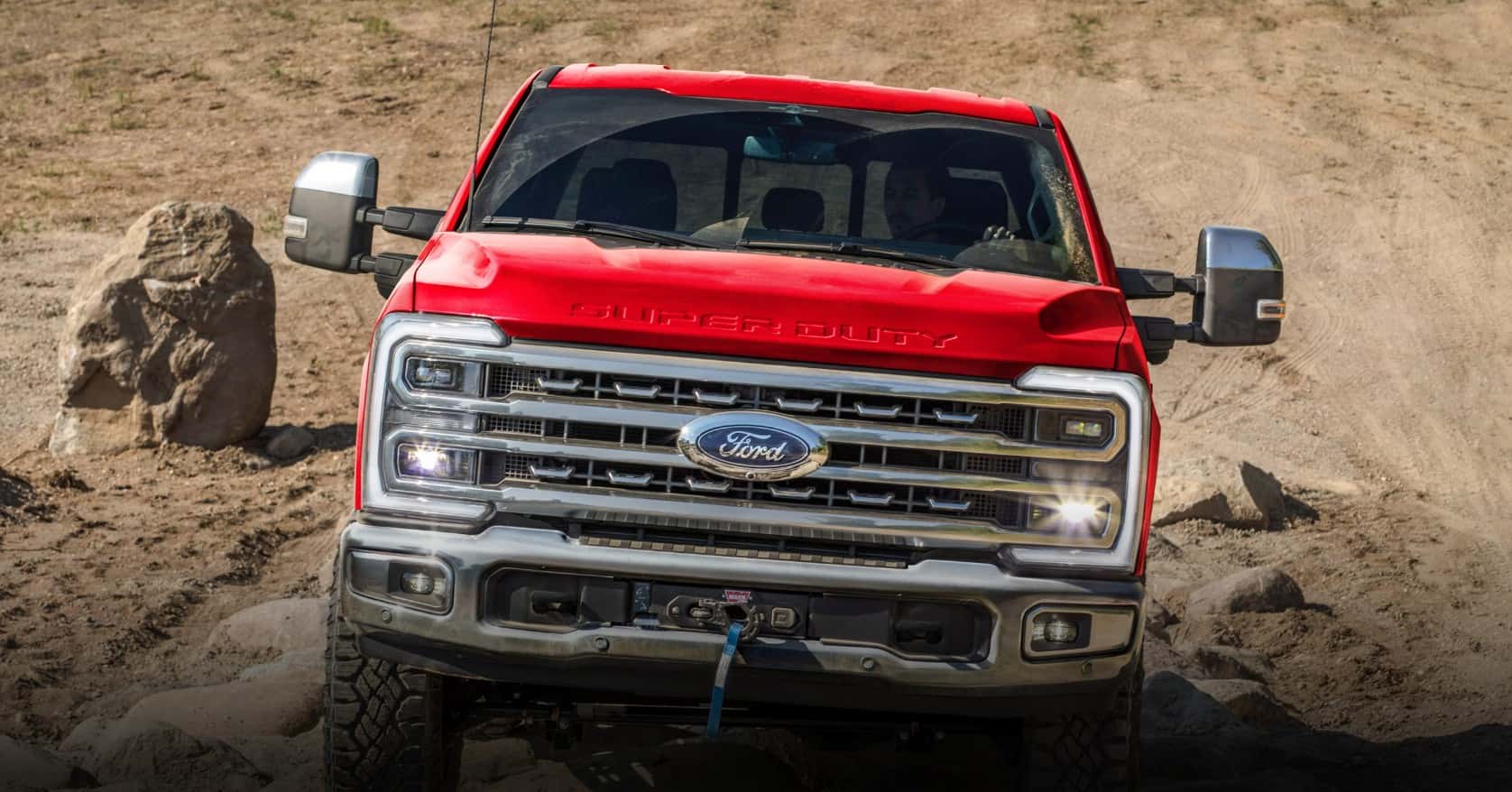
The 2026 Ford F-350 Super Duty with the High-Output Power Stroke diesel — 500 HP, 1,200 lb-ft of torque, and a 38,000-pound towing ceiling. Available at Rob Sight Ford in Kansas City, MO.
F-350 Dually vs. Single Rear Wheel — and Hitch Type Explained
After engine choice, the two biggest variables in F-350 towing capacity are wheel configuration and hitch type. Together, they determine whether your F-350 reaches 38,000 pounds or falls well short of it — and understanding why helps you make the right call for your actual use case rather than just chasing the maximum number.
Dual Rear Wheel (DRW) vs. Single Rear Wheel (SRW)
The dual rear wheel — dually — configuration mounts four tires on the rear axle instead of two. That wider contact patch and greater load-spreading capability is what enables the F-350’s maximum towing and payload ratings. The DRW setup is approximately six inches wider than SRW, which improves lateral stability in crosswinds and significantly reduces trailer sway at highway speeds — benefits you feel immediately when towing large fifth-wheel RVs or heavy flatbeds on Missouri interstates. The SRW configuration handles like a conventional pickup, fits standard parking spaces around the Kansas City metro, costs less to buy, and is the right choice for any buyer whose trailers stay comfortably below 20,000 pounds.
| Specification | DRW (Dually) | SRW (Single Rear Wheel) |
|---|---|---|
| Maximum Towing | Up to 38,000 lbs | Up to 21,000–24,000 lbs |
| Maximum Payload | Up to 8,000 lbs | 4,500–5,000 lbs |
| Overall Width | ~96 inches (8 feet) | ~80 inches (6.7 feet) |
| Stability While Towing | Excellent — wider track, 4-tire contact | Very good — standard track width |
| Daily Maneuverability | Requires more attention in tight spaces | Standard parking, easy navigation |
| Unloaded Ride Quality | Stiffer — suspension tuned for load | More comfortable when empty |
| Best For | Maximum towing, commercial operators, frequent heavy haulers | Trailers under 20,000 lbs, daily drivers, weekend towers |
Conventional vs. Fifth-Wheel vs. Gooseneck: Why the Numbers Differ
The 10,000-pound gap between conventional hitch towing (28,000 lbs) and fifth-wheel or gooseneck towing (38,000 lbs) is entirely a matter of physics — specifically, where the trailer’s weight sits in relation to the rear axle. A conventional receiver hitch mounts behind the rear axle. The trailer tongue weight — typically 10 to 15 percent of the trailer’s gross weight — acts as a lever behind that axle, lifting the front end slightly and limiting how much total weight the truck can safely control. Fifth-wheel and gooseneck hitches place the connection point directly over or slightly forward of the rear axle, eliminating that leverage disadvantage. Weight is supported directly rather than leveraged against the frame, which is why the same truck and engine combination produces dramatically different ratings depending on hitch type.
| Hitch Type | Max F-350 Capacity | Connection Point | Best For |
|---|---|---|---|
| Conventional Receiver | 28,000 lbs | Rear bumper — behind axle | Travel trailers, boat trailers, utility trailers, livestock under 20,000 lbs |
| Fifth-Wheel | 38,000 lbs | Bed-mounted kingpin coupler — over axle | Large RVs, heavy horse trailers, commercial flatbeds |
| Gooseneck | 38,000 lbs | Bed-mounted ball — over axle (removable) | Agricultural, construction, equipment trailers — ball removes for full bed access |
Gooseneck hitches offer a practical advantage over fifth-wheel setups for commercial and agricultural users: the ball mounts flush in the bed floor and can be removed entirely when not in use, leaving your full cargo bed available. Kansas City-area farmers, contractors hauling equipment, and ranchers moving livestock on Missouri back roads consistently choose gooseneck setups for exactly this reason. For buyers moving large RVs, the fifth-wheel’s kingpin coupling provides a more refined tow feel at highway speeds. Both systems deliver identical capacity.
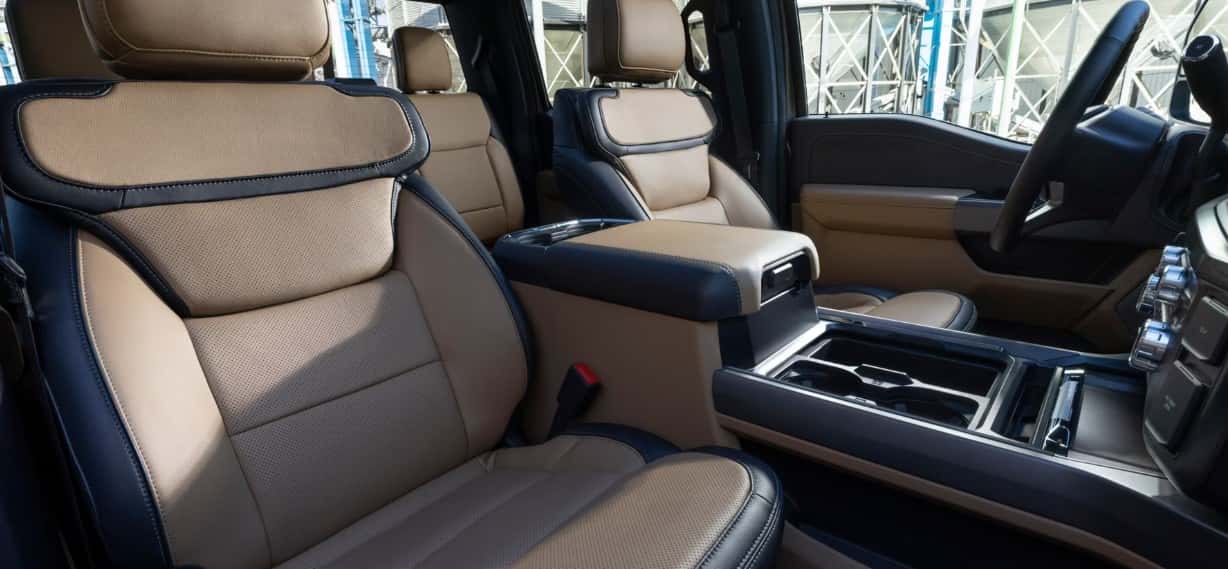
The F-350’s fully boxed high-strength steel frame, multi-stage rear leaf springs, and available DRW configuration are engineered for GCWR values exceeding 45,000 pounds. Rob Sight Ford serves Kansas City and the surrounding Missouri metro.
Cab Configuration and Axle Ratio: Fine-Tuning Your F-350
Once you’ve selected your engine and wheel configuration, cab style and axle ratio are the two remaining variables that affect your F-350’s real-world towing performance. These choices involve trade-offs — more passenger space vs. lighter curb weight, more towing torque vs. better highway fuel economy — and understanding them helps you avoid over- or under-specifying your truck.
Cab Style Impact on Towing and Payload
Cab style affects towing in two ways: curb weight and wheelbase. A heavier cab reduces the payload budget available for cargo and tongue weight. A longer wheelbase actually improves towing stability — more distance between axles creates better damping of trailer sway oscillations. The trade-off is overall vehicle length, which affects maneuverability in tight spaces around the Kansas City metro and on Missouri job sites.
Regular Cab
The lightest and shortest configuration, seats up to three on a single bench. Delivers the highest payload ratings and is the reference configuration for F-350 maximum towing numbers. When manufacturers publish 38,000-pound ratings, they’re typically measured with a Regular Cab and 8-foot bed. Best for solo operators, commercial fleets, and anyone maximizing payload above passenger capacity.
SuperCab
Adds rear-hinged access doors and a compact rear seat — practical for occasional adult passengers and tool/gear storage. Adds weight and length relative to the Regular Cab, with a modest reduction in payload and towing. Can still tow over 30,000 pounds with diesel power and dual rear wheels. The practical middle ground for small business owners who occasionally carry a helper or need controlled rear-cab storage.
Crew Cab
Four full-size doors, a spacious rear bench — comfortable for five adults. Adds 400 to 600 pounds over the Regular Cab, which comes from available payload. Still capable of towing over 35,000 pounds with the right engine and hitch setup. The longer wheelbase actually improves fifth-wheel towing stability at highway speeds. The right choice for Kansas City families and crews who need full-time rear passenger comfort without sacrificing Super Duty towing authority.
Rear Axle Ratio: Matching Gearing to Your Towing Demands
The axle ratio determines how many times the driveshaft rotates for each rotation of the rear wheels. Higher numerical ratios (4.10, 4.30) provide more mechanical advantage — better low-end torque, stronger acceleration under load, and more confident climbing on grades. The trade-off is higher engine RPM at highway speed, which reduces fuel economy when running empty. Lower ratios (3.55, 3.73) favor highway efficiency and are appropriate when towing loads well below maximum capacity. Ford’s published towing ratings assume a specific minimum axle ratio — choosing a lower ratio than recommended for your configuration can reduce your official towing capacity.
| Axle Ratio | Towing Strength | Highway Efficiency | Best For |
|---|---|---|---|
| 3.55 | Good — light to moderate towing | Best highway MPG | Occasional towing under 15,000 lbs, daily driving priority |
| 3.73 | Strong — handles 15,000–25,000 lbs well | Good balance | Most popular — balanced capability and fuel economy |
| 4.10 | Excellent — 25,000–35,000 lb range | Reduced — higher RPM at speed | Frequent heavy towing, hilly terrain, Missouri grades |
| 4.30 | Maximum — near the 38,000-lb ceiling | Lowest highway MPG | Extreme towing at or near maximum capacity |
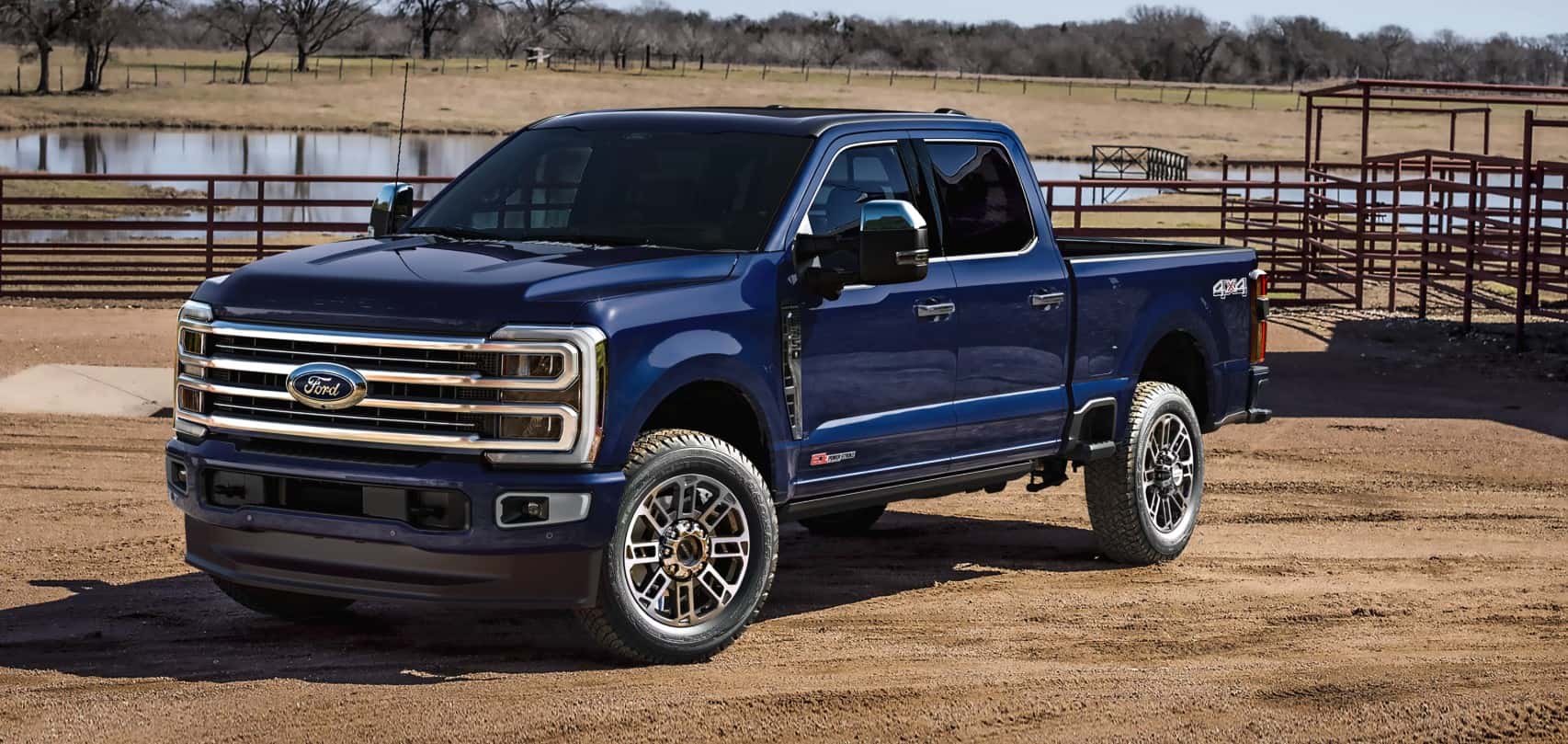
Every 2026 F-350 trim level — XL through Limited — tows the same maximum weight with identical mechanical configurations. Rob Sight Ford in Kansas City stocks the full F-350 lineup.
Trim Levels, Smart Towing Tech, and Real-World Capacity
Trim Level Does Not Affect Towing Capacity
This is one of the most common misconceptions Kansas City F-350 buyers bring into our showroom: that choosing a higher trim reduces towing capability. It doesn’t. An XL and a Limited equipped with identical engines, axle ratios, and hitch setups will produce identical towing ratings. Higher trim levels — Lariat, King Ranch, Platinum, Limited — add 200 to 400 pounds of luxury content (leather, insulation, technology hardware), which slightly reduces the available payload budget, but the maximum trailer weight rating is unchanged. Choose your trim based on how you want to live in the truck day to day. Then spec the mechanical components for your towing needs.
| Trim Level | Starting Price | Max Towing (when properly equipped) | Best For |
|---|---|---|---|
| XL | ~$40,000 | Up to 38,000 lbs | Commercial fleets, dedicated work trucks, highest payload budget |
| XLT | ~$45,000–$52,000 | Up to 38,000 lbs | Work and family use, most popular configuration |
| Lariat | ~$55,000–$65,000 | Up to 38,000 lbs | Professionals wanting luxury with full towing performance |
| King Ranch / Platinum | ~$70,000–$80,000 | Up to 38,000 lbs | Top-tier luxury with onboard scales, smart hitch, full driver-assist |
| Limited | ~$85,000–$90,000+ | Up to 38,000 lbs | Maximum luxury, exclusive features, flagship F-350 ownership |
Smart Towing Technology
Raw towing capacity is only part of the story. The F-350’s integrated towing technology makes that capacity genuinely usable — and significantly safer — for drivers of all experience levels. These systems are available across multiple trim levels and are worth understanding when configuring your truck.
Pro Trailer Backup Assist
A dashboard-mounted knob controls trailer direction in reverse — turn the knob left and the trailer goes left. The F-350 handles the counterintuitive steering inputs automatically. Backing into narrow barn entrances, storage yards, and campsite spots becomes a manageable task for any driver. Available on XLT and above.
Trailer Sway Control
Monitors trailer movement in real time and responds to developing sway by selectively applying individual wheel brakes and reducing engine torque before the situation becomes dangerous. Crosswinds on Kansas City-area interstates and passing semis on Highway 50 are where this system earns its keep. Standard across the F-350 lineup.
Onboard Scales with Smart Hitch
Displays real-time payload weight and trailer tongue weight on the dashboard screen. No guessing, no overloading, no trips to a commercial scale. For Kansas City contractors managing load compliance and commercial operators who need to stay within legal GVWR limits, this is one of the Platinum trim’s most practical features.
BLIS with Trailer Coverage
Extends blind spot monitoring to cover the full length of the trailer, not just the truck. Critical during lane changes on I-70, I-35, and I-435 when a long fifth-wheel or flatbed trailer blocks your natural sight lines. Standard on Lariat and above.
What 38,000 Pounds Actually Looks Like
The maximum towing figures only mean something when you understand what they translate to in the real world. Kansas City-area buyers use their F-350s for a wide range of towing missions — here’s how the capacity maps to common scenarios:
Large Fifth-Wheel RV (28,000–38,000 lbs)
High-end fifth-wheel coaches and large toy haulers in this weight range require the HO Power Stroke diesel and a DRW configuration. Missouri’s rolling terrain on the way to the Lake of the Ozarks or Branson makes torque reserve at highway speed a meaningful comfort factor.
Horse Trailers (10,000–22,000 lbs)
A fully loaded 4-horse slant-load trailer can weigh 18,000 to 22,000 pounds. The 7.3L gas V8 handles the lighter end comfortably; the Power Stroke diesel delivers the reserve torque needed for smooth starts and confident hill climbing with a full load of horses aboard.
Construction & Equipment Trailers (20,000–38,000 lbs)
Loaded equipment trailers — skid steers, mini excavators, large generators — regularly reach 25,000 to 35,000 pounds. The gooseneck hitch is the go-to choice for Johnson County and Kansas City-area contractors: maximum capacity, clean bed when the job doesn’t require the hitch.
Boat Trailers (8,000–18,000 lbs)
Bass boats, wake boats, and pontoons with trailers fall in the 8,000 to 15,000-pound range — well within both gas engine options’ ratings. The 6.8L V8 with its 8,000-pound payload capacity is an efficient, cost-effective choice for Lake of the Ozarks or Truman Lake weekend boaters who don’t need diesel power.
Kansas City business owners looking to understand the Section 179 tax implications of an F-350 purchase should also review our Ford Super Duty Section 179 deduction guide — all F-350 models qualify, across every trim level and configuration.
Find Your F-350 Towing Setup at Rob Sight Ford in Kansas City
Rob Sight Ford stocks the full F-350 lineup across multiple engine options, cab configurations, wheel setups, and trim levels — so you can compare a gas-powered Regular Cab XL work truck against a diesel Crew Cab DRW Platinum in person and understand exactly how the numbers translate to real towing confidence. Our team works with contractors, ranchers, fleet operators, and families across Kansas City, Overland Park, Lee’s Summit, and the broader Missouri metro every day.
Call us at 816-895-6901 to discuss your specific towing requirements, check current F-350 inventory online, or apply for business financing before you arrive. We’ll help you build the exact configuration that matches your trailer, your loads, and your budget — not just sell you the highest number on the spec sheet.
Frequently Asked Questions
What is the maximum towing capacity of the Ford F-350?
The 2026 Ford F-350 Super Duty can tow up to 38,000 pounds when properly equipped with the High-Output 6.7L Power Stroke diesel, a dual rear wheel (dually) configuration, and a fifth-wheel or gooseneck hitch. With a conventional receiver hitch, the maximum towing capacity is 28,000 pounds. Maximum payload capacity reaches 8,000 pounds. Rob Sight Ford in Kansas City stocks multiple F-350 configurations and can help you identify the exact setup that reaches these ratings.
What engine gives the Ford F-350 its maximum towing capacity?
The High-Output 6.7L Power Stroke turbo-diesel V8 is the engine required to reach the F-350’s 38,000-pound maximum towing capacity — producing 500 horsepower and 1,200 lb-ft of torque. The standard 6.7L Power Stroke diesel delivers 475 horsepower and 1,050 lb-ft, with a 36,500-pound maximum. Gas engines trail significantly: the 7.3L V8 tops out at 22,500 pounds and the 6.8L V8 at 18,900 pounds. For regular heavy towing, the diesel investment typically pays for itself in capability, efficiency under load, and long-term durability.
Does the F-350 dually tow more than single rear wheel models?
Yes. The dual rear wheel (DRW) F-350 reaches the maximum 38,000-pound towing capacity and up to 8,000 pounds of payload. Single rear wheel (SRW) models top out at approximately 21,000 to 24,000 pounds of towing with 4,500 to 5,000 pounds of payload. The DRW setup spreads weight across four rear tires, improving stability in crosswinds and enabling safely higher combined weights. The SRW is narrower, easier to maneuver daily, and adequate for most Kansas City buyers whose trailers stay under 20,000 pounds.
What is the difference between conventional and fifth-wheel towing capacity on the F-350?
The F-350’s towing capacity is 28,000 pounds with a conventional receiver hitch and up to 38,000 pounds with a fifth-wheel or gooseneck hitch. The 10,000-pound difference comes from weight distribution: fifth-wheel and gooseneck hitches position the trailer’s pin weight directly over the rear axle, eliminating the leverage disadvantage of conventional hitches where tongue weight acts behind the axle. The Gross Combined Weight Rating (GCWR) can reach 45,600 pounds in properly configured F-350 models.
Does choosing a higher F-350 trim level reduce towing capacity?
No. Towing capacity on the Ford F-350 is determined by engine, drivetrain, axle ratio, and hitch type — not trim level. An XL and a Limited with identical mechanical configurations tow identically. Higher trims add 200 to 400 pounds of luxury content, which slightly reduces the available payload budget, but the maximum trailer weight rating is unchanged. Choose the trim that fits your comfort and technology preferences, then configure the mechanical components for your towing requirements.
0 comment(s) so far on 2026 Ford F-350 Towing Capacity: Complete Guide by Trim