

Commercial Truck Lease Deals in Kansas City | Ford Super Duty & Transit
Commercial Truck Lease Deals in Kansas City
Flexible TRAC and closed-end lease options on the Ford Super Duty and Transit, built for Kansas City contractors, tradespeople, and fleet operators who need a work truck without tying up capital
Commercial truck lease deals give Kansas City businesses a way to put a Ford Super Duty or Transit to work without a large down payment eating into cash flow. Rather than one loan structure, Ford Pro offers three distinct paths — an open-end CommerciaLease built around the Terminal Rental Adjustment Clause (TRAC), a closed-end Commercial Red Carpet Lease for predictable light-duty use, and traditional installment financing for businesses that plan to own the truck outright — and the right one depends on how many miles you’ll rack up, how often you replace vehicles, and how your accountant wants the tax picture to look.
This guide breaks down how each lease structure works, which Super Duty and Transit configurations are available to lease, what a lender looks for in a commercial application, and how leasing stacks up against buying once Section 179 enters the picture. If you’re still comparing body styles and payload before you get to financing, our commercial vehicle inventory is a good place to start. We’re not tax or financing advisors — pair this guide with a conversation with your CPA and our commercial team before you sign.
Key Takeaways
- Ford Pro offers three commercial structures: the CommerciaLease (TRAC), the Commercial Red Carpet closed-end lease, and installment financing — each suited to a different mileage and ownership pattern.
- TRAC leases carry lower payments and no mileage cap, but your business shares the risk (or reward) on the truck’s resale value at lease end.
- Closed-end leases cap mileage around 100,000 miles and a 5-year term but let you walk away, buy out, or renew with zero residual-value risk.
- Lease terms on Super Duty and Transit commercial deals typically run 12 to 72 months through a single business Commercial Line of Credit.
- Section 179 is a purchase-based deduction — standard operating leases don’t qualify, though a TRAC lease structured as a capital lease sometimes can, subject to IRS guidelines.
- Every Ford purchase or lease at Rob Sight Ford includes our standing offer of $100 below invoice pricing on all Ford vehicles except specialty units.
- Both the Super Duty (F-250, F-350, F-450) and Transit (150 through 350 HD, plus E-Transit) lineups are available to lease at Rob Sight Ford.
Commercial Truck Leasing — At a Glance
Lease Terms: 12–72 Months | Structures Available: TRAC, Closed-End, Financing | Closed-End Mileage Cap: ~100,000 mi | Standing Offer: $100 Below Invoice
Understanding Commercial Truck Leasing in Kansas City
A commercial lease works differently than a retail car lease. Instead of a single one-size-fits-all agreement, Ford Pro’s FinSimple program bundles three separate structures under one business Commercial Line of Credit, so a Kansas City contractor buying a single Transit and a landscaping company rotating ten F-250s through a fleet can each pick the structure that matches how they actually use the truck.
The three options are the CommerciaLease, built around a Terminal Rental Adjustment Clause (TRAC); the Commercial Red Carpet Lease, a closed-end structure with no residual-value exposure; and Commercial Installment Financing, which is a traditional purchase spread across fixed monthly payments. Each shifts the balance between monthly payment size, mileage flexibility, and who’s on the hook for the truck’s value when the term ends.
Lease vs. Finance: The Three Structures Compared
| Feature | CommerciaLease (TRAC) | Red Carpet Lease (Closed-End) | Installment Financing |
|---|---|---|---|
| Monthly Payment | Lowest of the three | Fixed, moderate | Highest (building equity) |
| Mileage Limit | None | ~100,000 miles typical | None |
| End-of-Term Risk | Business shares residual value risk | None — return, buy out, or renew | None — you own the truck |
| Best For | High-mileage, long-term fleets | Predictable, light-use replacement cycles | Businesses keeping the truck 5+ years |
| Section 179 Fit | Possible if structured as a capital lease | Generally not applicable | Full Section 179 eligibility |
For a business weighing a single work truck against a broader fleet rollout, the deeper mechanics of Ford Pro’s financing, telematics, and vehicle ecosystem are covered in our Ford Pro commercial fleet buying guide.
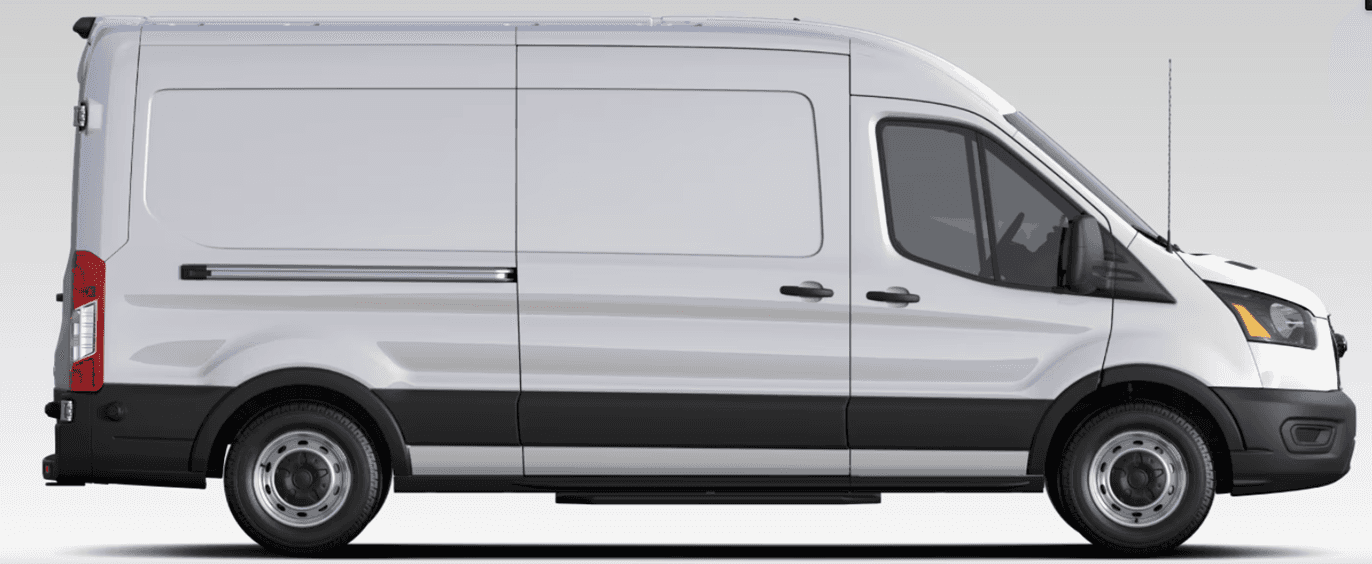
Whether it’s a single Transit cargo van or a rotating fleet of Super Duty trucks, the right lease structure comes down to mileage, replacement cycle, and how you want the tax picture to look.
Which Ford Work Trucks Are Available to Lease? Super Duty & Transit Lineup
Both of Ford’s heavy commercial lines are eligible for TRAC, closed-end, or installment structures through Rob Sight Ford’s commercial team. Which one makes sense for a lease usually comes down to GVWR, payload, and how the truck fits your daily routes.
Ford F-250 Super Duty
GVWR up to roughly 11,400 lbs, starting around $45,975 to purchase — a strong lease candidate for trades and service fleets that need daily-driver comfort with heavy-duty capability.
Ford F-350 Super Duty
GVWR up to 14,000 lbs on dual-rear-wheel builds, starting around $47,270 — the go-to for towing-heavy businesses hauling trailers, equipment, or gooseneck loads.
Ford F-450 Super Duty
GVWR up to 19,500 lbs, starting around $62,330 — built for the heaviest towing and payload jobs, and typically leased through TRAC given its higher upfront cost.
Ford Transit Cargo Van & E-Transit
GVWR from roughly 8,670 lbs (150 series) up to 11,000 lbs (350 HD), with pricing from $50,495 to $55,355 depending on series — a common closed-end lease pick for route-based and delivery businesses.
| Model | GVWR Range | Approx. Starting Price* | Typical Lease Fit |
|---|---|---|---|
| F-250 | ~11,400 lbs | ~$45,975 | Closed-end or TRAC |
| F-350 | Up to 14,000 lbs | ~$47,270 | TRAC for high-mileage towing |
| F-450 | Up to 19,500 lbs | ~$62,330 | TRAC for maximum payload/towing use |
| Transit 150–350 | ~8,670–9,500 lbs | $50,495–$53,000 | Closed-end for route/delivery use |
| Transit 350 HD / E-Transit | 9,950–11,000 lbs | $54,000–$55,355 | Closed-end or TRAC by mileage |
*Approximate figures before destination charge and options; actual purchase price or lease payment depends on configuration, term, and current offers. See current Super Duty inventory at Ford Super Duty for sale and Transit inventory at Ford Transit for sale.
TRAC Lease vs. Closed-End Lease: Choosing the Right Structure
The single biggest decision in commercial leasing isn’t the truck — it’s who carries the resale-value risk when the term is up. A TRAC lease and a closed-end lease answer that question in opposite ways, and picking wrong can either inflate your monthly payment or leave you exposed to a shortfall you didn’t budget for.
With a TRAC lease, you and Ford Credit agree on a projected residual value at signing. Run the truck hard, put a lot of miles on it, or let it age past the agreed condition, and you may owe the difference when it’s sold at lease end; keep it in strong shape and you could come out ahead. In exchange for taking on that risk, TRAC leases skip mileage penalties entirely and typically post the lowest monthly payment of the three structures — which is why long-haul and heavy-utilization fleets tend to prefer it.
With a closed-end lease, Rob Sight Ford’s Commercial Red Carpet Lease, the math is locked in from day one. You pay a fixed monthly amount for a set term, and at the end you have three clean options: hand back the keys, buy the truck at the pre-agreed price, or roll into a new lease — with zero exposure to what the truck is actually worth on the used market. The tradeoff is a mileage ceiling, typically around 100,000 miles over the life of the lease, with per-mile charges if you go over.
Does Vehicle Type Change Which Structure Fits Best?
Not by rule, but in practice it often does. A Transit running a tight delivery loop with known annual mileage is a natural fit for a closed-end lease, since the mileage cap is easy to plan around. An F-350 or F-450 pulling equipment across job sites with unpredictable routes, on the other hand, is harder to keep under a mileage ceiling — which is why TRAC tends to be the more common choice for heavier-duty, higher-mileage Super Duty use.
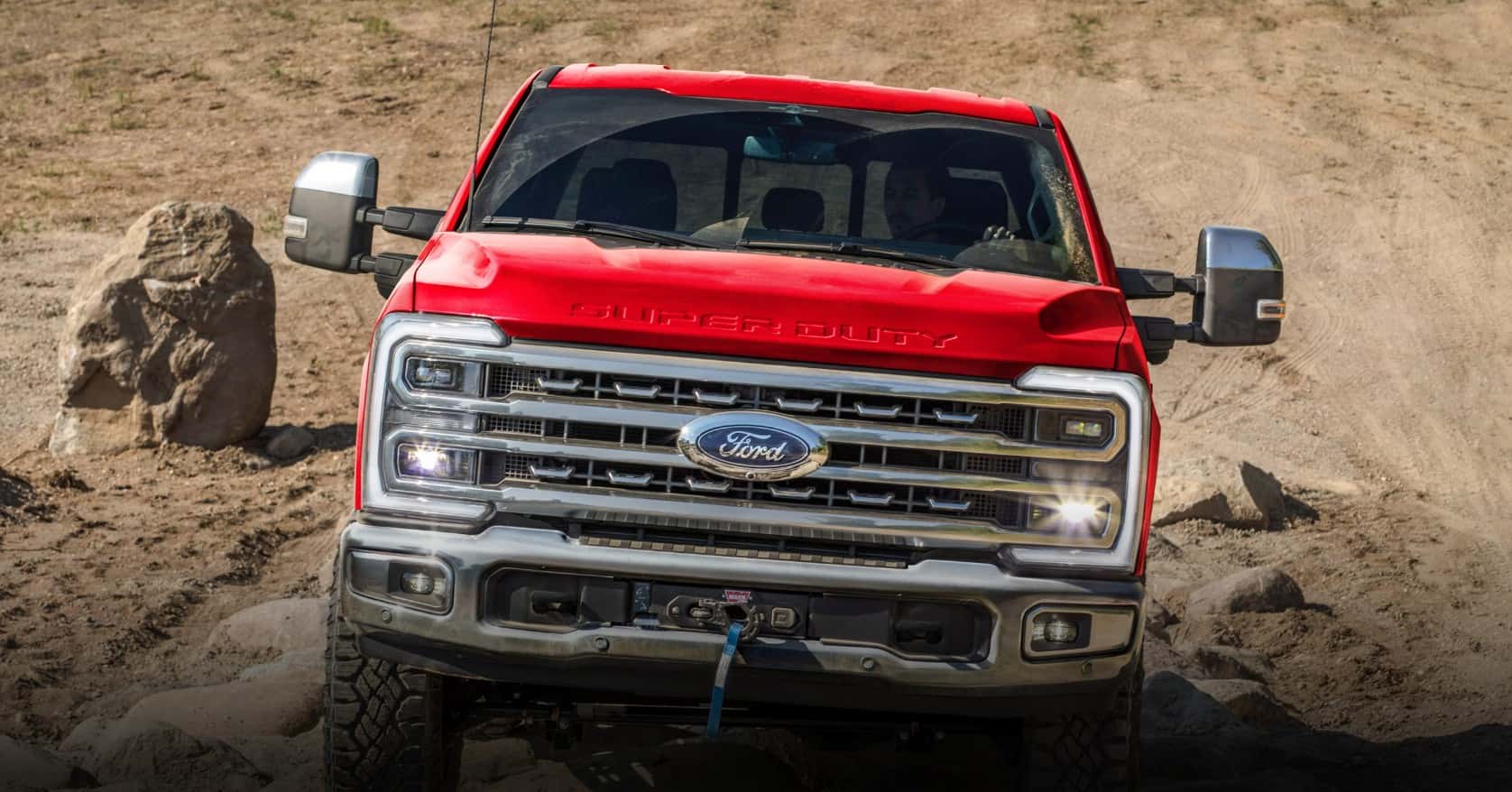
A TRAC lease trades mileage freedom for shared resale risk — a tradeoff that tends to favor heavier-use Super Duty fleets over predictable, low-mileage routes.
What It Takes to Qualify for a Commercial Truck Lease
Commercial lease underwriting looks at the business first, not just the person signing the paperwork. Four factors tend to shape approval, term, and monthly payment:
Business Line of Credit
Ford Pro FinSimple runs TRAC, closed-end, and installment structures through a single Commercial Line of Credit application, so you apply once and can draw against it as you add vehicles.
Time in Business & Financials
Lenders typically want business bank statements or financials and some track record of operation. Newer businesses can often still qualify with a personal guarantee.
Business Titling
The truck or van needs to be titled and registered to the business — LLC, corporation, partnership, or a sole proprietor DBA — rather than to an individual.
Anticipated Mileage & Use
Be upfront about expected annual mileage and job-site conditions before choosing TRAC vs. closed-end — it’s the single biggest factor in which structure actually saves you money.
| Factor | Impact on the Decision | Guidance |
|---|---|---|
| Business credit & financials | Drives approval and rate | Have recent statements ready before applying |
| Titling | Must be in the business’s name | Confirm entity details before signing |
| Expected annual mileage | Determines TRAC vs. closed-end fit | Estimate honestly, including seasonal spikes |
| Replacement cycle | Shapes lease term length | Match term to how often you refresh the fleet |
Leasing vs. Buying: Tax and Cash Flow Considerations
Leasing and buying pull on different levers come tax time, and neither is automatically better — it depends on what your business needs from the truck and from this year’s return.
Lease Payments as an Operating Expense
The business-use portion of a monthly lease payment is generally deductible as an ongoing operating expense, giving you a steady write-off each year rather than one large deduction up front.
Section 179 Favors Ownership
Section 179 lets a business expense a qualifying truck’s cost the year it’s placed in service, but it applies to purchases, not standard leases — see our Ford Super Duty Section 179 guide and Ford Transit Section 179 guide for how each model qualifies when purchased.
The TRAC Capital Lease Nuance
A TRAC lease structured as a capital lease can sometimes be treated as a purchase for tax purposes, which may open the door to Section 179 or bonus depreciation — this depends entirely on how the agreement is written, so confirm the structure with your tax advisor before assuming either treatment applies.
Cash Flow & Balance Sheet
Leasing generally preserves more working capital up front than a purchase, which can matter more to a growing business than maximizing a single year’s deduction.
If your priority is a large first-year deduction on a heavy-GVWR truck, buying through installment financing keeps that fully on the table. If predictable monthly costs and lower up-front capital matter more, a lease — TRAC or closed-end — usually wins. Either way, this is a conversation worth having with your CPA before you commit to a structure.
2026 Lease Terms, Mileage Allowances & Payment Ranges
Ford Pro’s commercial structures run on flexible terms rather than one fixed schedule, so the numbers below are meant as a planning framework rather than a quote — your actual payment depends on the specific truck, term, mileage allowance, down payment, and your business’s credit profile.
| Term Element | Typical Range | Notes |
|---|---|---|
| Lease/Finance Term | 12–72 months | Shorter terms on TRAC and closed-end; up to 72 months on financing |
| Closed-End Mileage Cap | ~100,000 miles total | Per-mile overage charges typically apply beyond the cap |
| TRAC Mileage Cap | None | Residual-value settlement replaces a mileage penalty |
| Vehicle Age (Closed-End) | Under 5 years | Only new vehicles qualify at lease start |
| Financing Structure | Commercial Line of Credit | One application covers TRAC, closed-end, and installment |
Estimate Your Monthly Payment
Because monthly lease and finance payments depend on term, mileage allowance, down payment, and current rates, the most accurate way to see where you’d land is to run the numbers directly. Our payment calculator lets you plug in a specific Super Duty or Transit configuration and term to get a working estimate before you talk to our commercial team about a firm quote.
*Terms and mileage allowances shown are general Ford Pro structures as of 2026 and are subject to credit approval, current incentives, and specific lease agreement terms. Confirm exact figures with our commercial finance team.
Which Lease Scenario Fits Your Business?
The right structure comes down less to which truck you’re after and more to how you’ll use it. Here’s how common Kansas City business situations tend to map onto the three options:
| Business Scenario | Recommended Structure | Why |
|---|---|---|
| Delivery or service route, predictable miles | Transit closed-end lease | Fixed payment, no residual risk, easy mileage planning |
| Trade business towing daily, high mileage | F-350 TRAC lease | No mileage cap, lower monthly payment |
| Fleet operator refreshing every 2–3 years | Closed-end lease across the fleet | Predictable costs, simple lease-end options |
| Plans to keep the truck 5+ years | Installment financing | No ongoing payment after the loan is paid off |
| Wants the largest possible year-one deduction | Purchase (cash or financing) | Keeps full Section 179 and bonus depreciation eligibility |
Tips for Getting the Best Commercial Truck Lease Deal in Kansas City
A little preparation before you sit down with a commercial finance team can meaningfully change the deal you walk away with. These tips apply whether you’re leasing one Transit or building out a Super Duty fleet:
Nail Down Your Real Annual Mileage
Underestimating mileage on a closed-end lease is one of the most common — and most avoidable — ways businesses overpay in overage charges. Look at last year’s actual routes, not a rough guess.
Have Business Financials Ready
A Commercial Line of Credit application moves faster with recent bank statements and financials on hand, which can also help secure better terms.
Match the Term to Your Replacement Cycle
A shorter lease term keeps you in newer trucks with fewer maintenance surprises; a longer installment term lowers the monthly payment if you plan to keep the vehicle well past the loan.
Loop In Your CPA Before You Sign
Whether a TRAC lease can be structured for Section 179 treatment, and whether leasing or buying makes more sense this tax year, are both worth confirming with your accountant before you commit.
Find Your Commercial Truck Lease Deal at Rob Sight Ford
Whether you need one Transit for a service route or a rotating Super Duty fleet, our commercial team can walk you through TRAC, closed-end, and financing options side by side and put together a lease deal that fits your mileage, budget, and tax situation. Every deal includes our standing offer of $100 below invoice pricing on Ford vehicles.
Call us at 816-895-6901 to speak with a commercial vehicle specialist, browse our current lease specials, or apply for financing before you arrive. Serving Kansas City, Overland Park, Lee’s Summit, Grandview, Blue Springs, and the surrounding area.
Frequently Asked Questions
What’s the difference between a TRAC lease and a closed-end lease on a commercial truck?
A TRAC lease, short for Terminal Rental Adjustment Clause, is an open-end lease where you and the lender agree on a projected residual value up front. At lease end the truck is sold, and you either pocket the surplus or owe the shortfall between the sale price and that residual — in exchange, TRAC leases typically carry lower monthly payments and no mileage restrictions, which suits high-mileage or heavy-use fleets. A closed-end lease, sold through Ford as the Commercial Red Carpet Lease, is a fixed-cost arrangement: you make a predictable monthly payment, and at the end of the term you simply return the truck, buy it at the pre-set price, or renew, with no exposure to its resale value. Closed-end leases generally require you to stay under roughly 100,000 total miles and keep the vehicle less than five years.
Can I lease a Ford Super Duty or Transit at Rob Sight Ford?
Yes. Rob Sight Ford’s commercial team works with Ford Pro FinSimple to set up CommerciaLease (TRAC), Commercial Red Carpet closed-end leases, and traditional installment financing on F-250, F-350, F-450, Transit Cargo Van, and E-Transit models, all through a single business Commercial Line of Credit. Terms typically run 12 to 72 months depending on the structure, and our team can walk Kansas City-area businesses through which option fits their mileage, replacement cycle, and budget.
Does leasing a commercial truck qualify for Section 179?
Generally, no — Section 179 is a purchase-based deduction, so a standard operating lease doesn’t qualify because your business isn’t the tax owner of the vehicle. The exception is a TRAC lease structured as a capital (non-tax) lease, which the IRS may treat as a purchase for tax purposes, potentially opening the door to Section 179 or bonus depreciation; this depends on how the specific agreement is written, so it’s worth confirming with your tax advisor before you sign. If claiming the full purchase-price deduction is the priority, installment financing or a cash purchase keeps Section 179 eligibility straightforward.
What do I need to qualify for a commercial truck lease?
Commercial leases are underwritten against your business rather than your personal credit alone, so lenders typically ask for time-in-business, business financials or bank statements, and an application for a Commercial Line of Credit. The vehicle also needs to be titled to the business and used for qualifying business purposes. Newer or smaller businesses may need a personal guarantee, and our finance team can outline exactly what your specific lease structure requires before you apply.
Is it better to lease or buy a work truck for a small business?
It depends on how you use the truck. Leasing tends to make sense when you replace vehicles every two to four years, want predictable monthly costs, or don’t need the full Section 179 deduction. Buying tends to make sense when you plan to keep the truck five-plus years, run high annual mileage, or want to maximize a first-year tax deduction on a heavy-GVWR truck or van. Many Kansas City businesses land on a mix — leasing lighter-duty, frequently refreshed vehicles while purchasing the trucks they’ll keep long-term — and it’s worth reviewing both scenarios with your accountant before deciding.
0 comment(s) so far on Commercial Truck Lease Deals in Kansas City | Ford Super Duty & Transit